Entry of
The knitted headcover: a small tradition riding on a golf bag
Knitted headcovers survive because they work: they cushion the club heads, announce the owner and give a knitter a small canvas with a pompom on top.
The knitted headcover is a small tradition that still rides on a golf bag because it does its job: it cushions the club heads against each other, it keeps rain off the ferrules, and it tells a foursome at a glance whose driver is whose. It is also one of the kindest gifts a knitter can make for a golfer, small enough to finish and personal enough to keep. For the knitter curious about what the club underneath does, woods, irons, loft and what a fitting can change, a guide that offers golf equipment plainly explained reads the way this almanac reads a ball band.
Where did knitted golf headcovers come from?
From the era when club heads were wood. Persimmon nicked and soaked and split, and a sock of thick wool over the head was cheap armour; knitters in the family produced them the way they produced socks, to a shape learned by measuring the club. The pompom was not decoration first: it was the handle you pulled the cover off by, and later the flag that told the clubs apart.
Metal woods removed the need and kept the custom. A bag of bare graphite looks anonymous, and a knitted cover is still the way a golfer's family gets into the photograph.
Which yarns survive a full season on a golf bag?
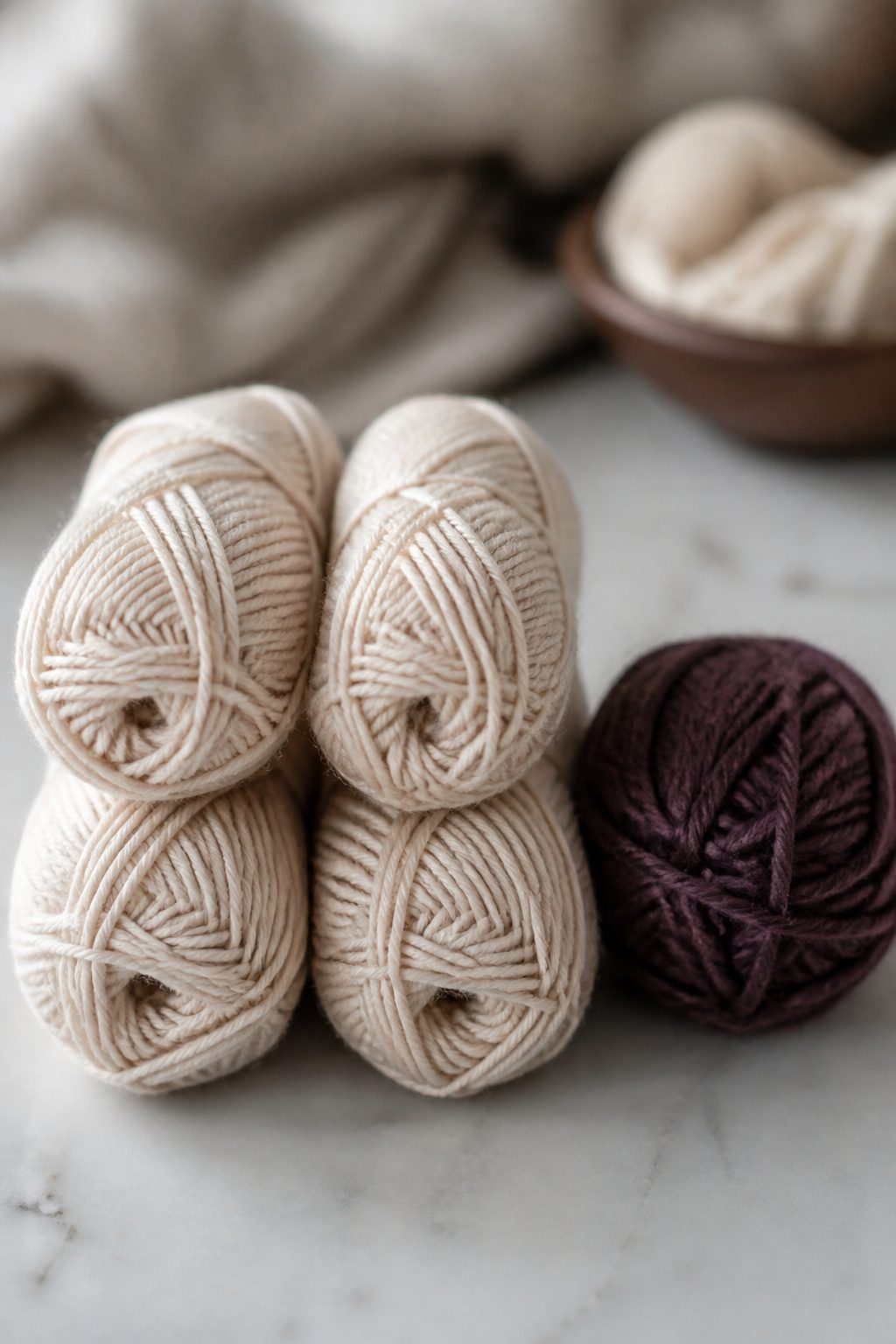
Worsted-weight wool or a tough acrylic, knitted tighter than the ball band suggests, because a headcover lives a harder life than a scarf: on and off a hundred times a round, dragged across grass and dropped on wet paths. Darker colours forgive the stains, and a superwash wool survives the clubhouse sink. Leave mohair, loose singles and anything that pills on sight of a velcro glove for gentler projects.
The label arithmetic is the same five numbers as always, weight, fibre, yardage, gauge and dye lot, which we laid out in what a yarn label tells you.
What do the numbered tags on headcovers actually mean?
They name the club underneath, matching the numbers stamped on the soles: a 1 for the driver, 3 and 5 for the fairway woods, and an X or a small h for the hybrids that no longer wear a plain number. The tag is a courtesy to the golfer, who should not have to lift three covers to find the club the shot needs.
The club underneath earns its number from its loft, and the knitter who reads the tag now knows which club the cover is protecting on Saturday morning.
One caution borrowed from the entry on pinning a flower on hand-knit: whatever you attach to a knitted surface, a number tag, a tassel, a small embroidered crest, should sit between stitches rather than through them, or it will mark the cover the way a pin marks a cardigan.
Sources
For the rules context in which the clubs are used, see The R&A.