Entry of
A gallery of knit and purl fabrics, and the easy scarf they make
Two stitches, knit and purl, in different orders, make every fabric on this page. The order is the whole design.
A knit and a purl are the same stitch seen from opposite sides. Knit a row, turn the work over, and what faces you is a row of purls. Everything below follows from that single fact, including why one fabric lies flat and another curls up like a scroll.
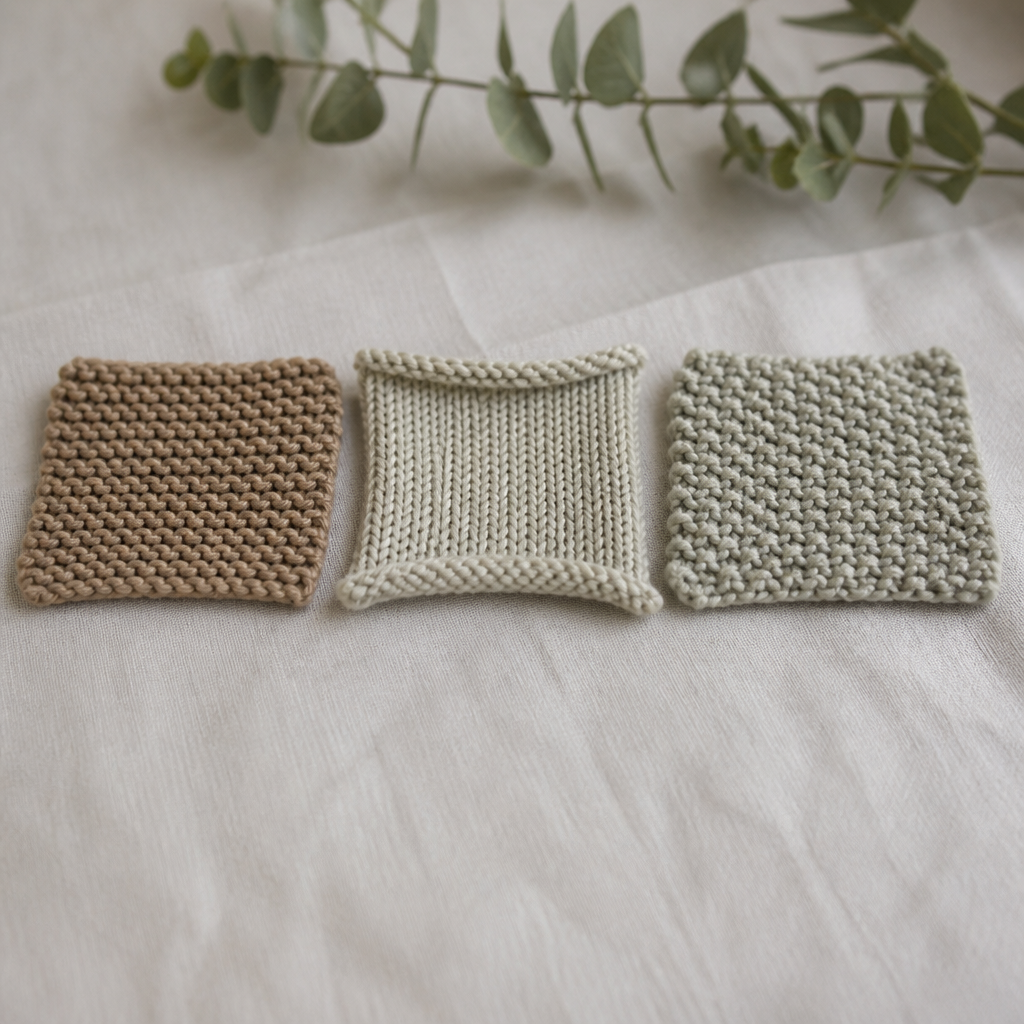
Garter stitch: knit every row
Knitting every row, on both faces, makes ridges. Garter stitch lies flat, looks the same on both sides, stretches lengthwise, and is thicker and squashier than anything else made from the same yarn.
Its row gauge is roughly double that of stockinette: two rows make one visible ridge, so a garter fabric takes about twice as many rows to reach the same length, and uses more yarn per inch of finished scarf as a result.
Stockinette: knit one row, purl the next
Stockinette gives the smooth face of V shapes that most people picture when they think of knitting, with purl bumps behind it. It is the fastest fabric to make and the least stable: the side edges roll toward the back and the cast-on edge rolls toward the front, because the two faces pull differently.
That curl cannot be knitted away. It is controlled by a border in another fabric, by a seam, or by blocking, and a stockinette scarf with no border will roll into a tube however long it is left flat.
Seed stitch: knit one, purl one, offset every row
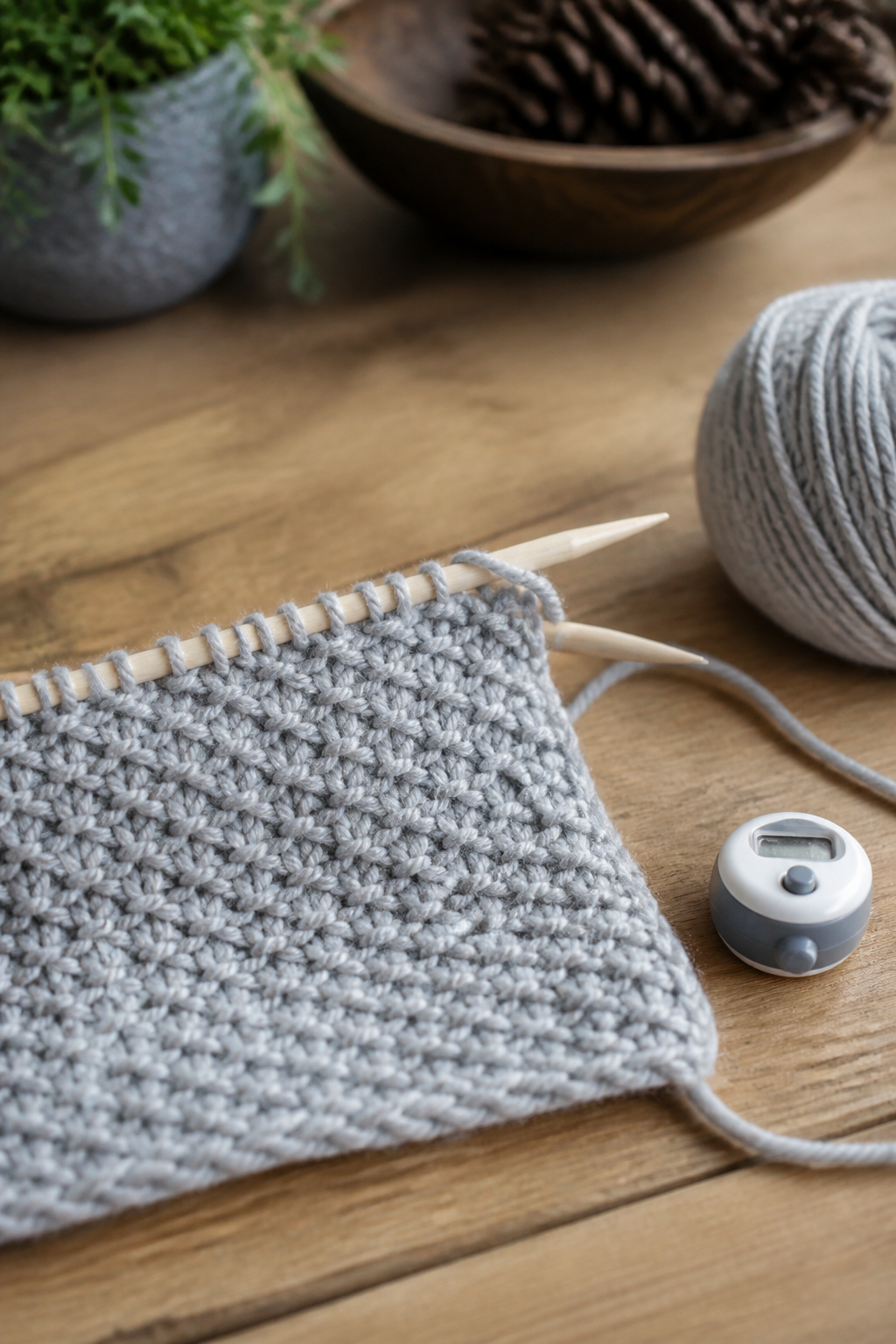
Alternating knits and purls within the row, then placing a purl above every knit, makes a fabric of small scattered bumps. It lies perfectly flat, looks the same on both sides, and is slower to knit than anything else here because the yarn moves from front to back at every single stitch.
It also uses noticeably more yarn than stockinette for the same area, roughly fifteen per cent, because the yarn travels further. That matters when buying for a scarf.
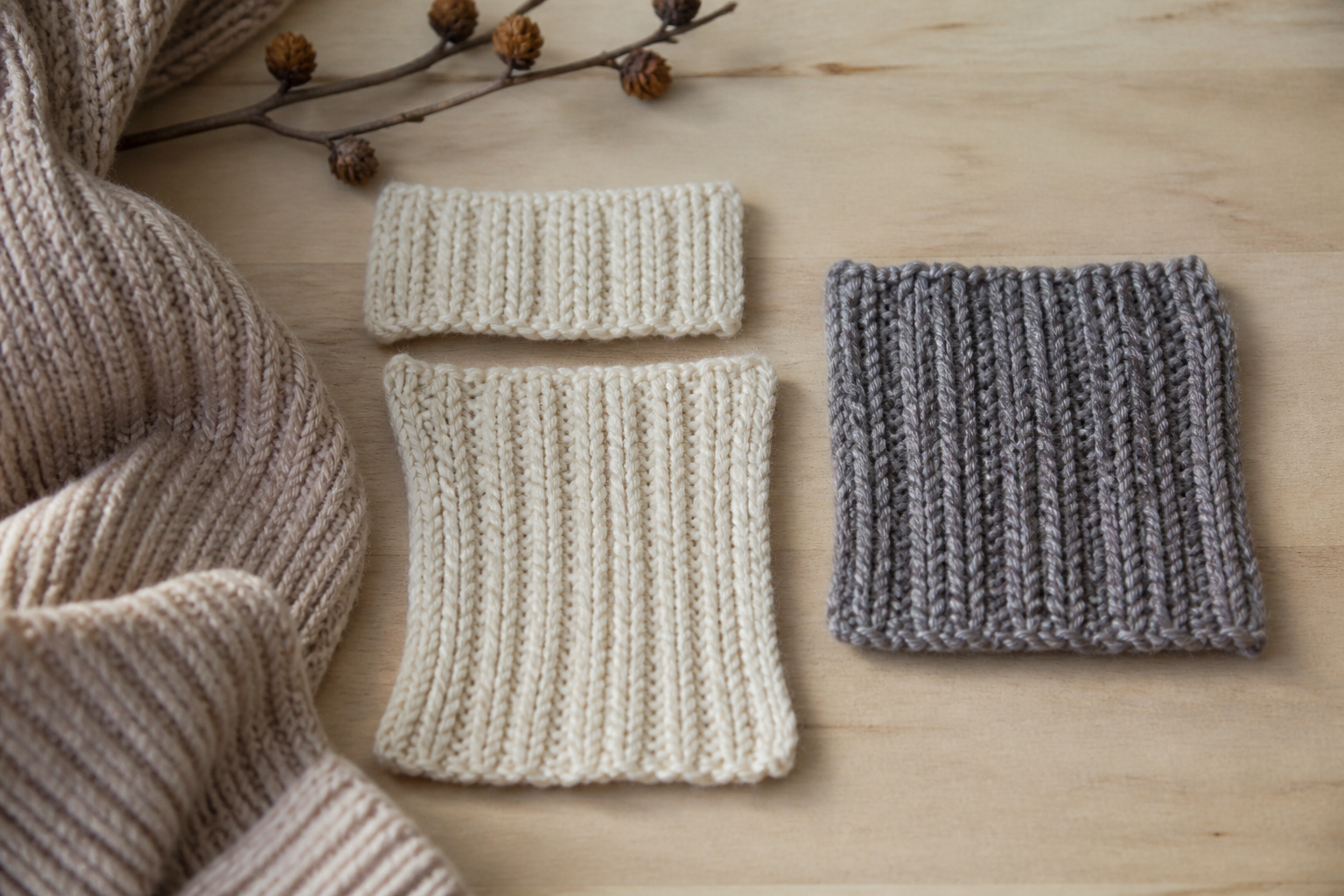
Ribbing: knits and purls in columns
Keeping the knits above the knits and the purls above the purls makes vertical columns that fold against each other. Ribbing pulls in widthwise and springs back, which is why cuffs, hems and hat brims are ribbed and why a ribbed scarf ends up narrower than the needles suggest.
One by one rib is the springiest; two by two shows its columns more clearly and is easier to keep track of. Both are reversible.
| Fabric | How it is worked | Lies flat | Same on both sides | Best used for |
|---|---|---|---|---|
| Garter | Knit every row | Yes | Yes | Scarves, blanket squares, borders |
| Stockinette | Knit RS, purl WS | No, curls | No | Sweater bodies, anything with a border |
| Seed | k1, p1 offset every row | Yes | Yes | Scarves, cuffs, button bands |
| Rib | Knits and purls in columns | Yes, pulled in | Yes | Cuffs, hems, hat brims, socks |
An easy scarf, worked the same way on every row
This is a plain seed stitch scarf. There is no right side, no wrong side, no row counting and nothing to remember: every row is identical, from the first to the last.
Gauge, and the number to cast on
Work a small swatch in seed stitch and measure it: 18 stitches over 4 inches is 4.5 stitches per inch. For a scarf 7 inches wide, that is 7 x 4.5 = 31.5 stitches. Round to an odd number: cast on 33.
The pattern
Every row: k1, then repeat p1, k1 to the end of the row.
Work until the scarf is as long as you want, keeping back enough yarn to bind off, which is about four times the width of the scarf. Bind off in pattern: knit the knits and purl the purls as you go, so the edge stays as elastic as the fabric. Weave the ends in along a column of stitches, not across them.
Why the odd number matters
With an odd stitch count, every row begins and ends with a knit, and the purl of one row automatically lands above the knit of the last. The offset happens by itself. With an even count you would have to start alternate rows with a purl, and a single forgotten row would turn the whole scarf into ribbing.
Three variations from the same 33 stitches
- Garter scarf: knit every row. Faster, thicker, stretchier lengthwise, and it will use a little more yarn.
- One by one rib scarf: k1, p1 to the end, every row, keeping the columns. Narrower and springier than the seed version from the same cast-on.
- Broken rib: row 1 knit every stitch, row 2 k1, p1 to the end. Two rows to remember instead of one, and a fabric with a stronger horizontal texture.
Working out the yarn before you buy
Two honest methods, both better than guessing:
- Weigh a piece. Knit four inches of the scarf, weigh it on a kitchen scale, and multiply by the number of four-inch sections in the finished length. A 60 inch scarf is fifteen of them.
- Estimate from the area. A scarf 60 by 7 inches is 420 square inches. Worsted stockinette runs at roughly a yard of yarn per square inch, and seed stitch about fifteen per cent more, which lands near 480 yards. Round up to the next whole skein and add one.
Buy every skein at once and check that the dye lot numbers match, for the reason set out in the entry on reading a yarn label. A scarf shows a lot change more clearly than almost any other object, because the join lands as a horizontal line across a plain field.
Added 12/09/2026. Two September entries lean on these fabrics: what a hand-knit will forgive when a flower is pinned to it, and the even tempo a session keeps, which is the same steadiness an even fabric needs.
One more page on the same question: texture and repetition at wall scale.
One more page on the same question: knitted pieces that read on camera.