Entry of
The best yarn for a first knitting project
Four adjectives decide whether a first project is a pleasure or a fight, and none of them is the fiber.
Beginners are usually steered toward a fiber. It is the wrong first question. What makes yarn easy or impossible to learn on is how it is built and what colour it is, and those are visible on the shelf before you touch it.
Smooth
Texture hides structure. On a boucle, an eyelash yarn or a thick and thin single, the loop you are supposed to put the needle into is invisible, and every mistake is invisible with it. A smooth yarn shows exactly where each stitch begins and ends, which is the entire teaching aid a beginner needs.
Plied
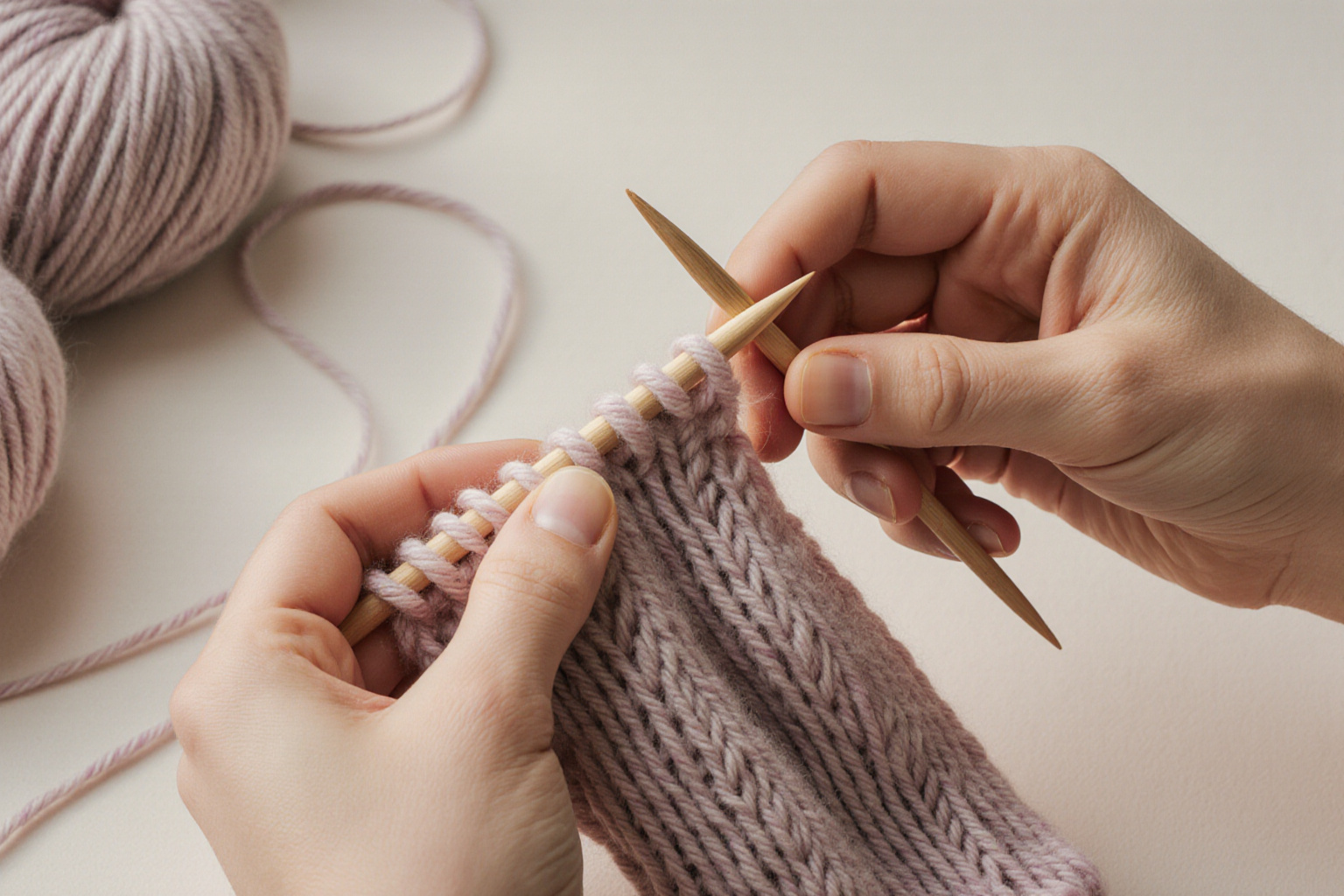
A ply is one spun strand. A plied yarn is two, three or four of them twisted together, and it behaves quite differently from a single. Singles split under the needle tip, untwist as you work, and pill quickly. Three and four ply yarns are round, resilient, and forgiving of a needle that arrives at the wrong angle.
Be careful with the word, though: in British patterns 4 ply is a weight name for a fine yarn, not a count of strands. The distinction, and the rest of what the ball band is telling you, is set out in the entry on reading a yarn label.
Pale
Dark yarn absorbs the light that would show the shape of a stitch. Black, navy and deep burgundy are genuinely harder to knit, not just less convenient, and they are the reason many beginners believe they have poor eyesight rather than poor lighting.
Variegated and self-striping yarns are tempting for the same reason they are unhelpful: the colour changes pull the eye away from the stitches. Keep them for the third project.
Medium weight
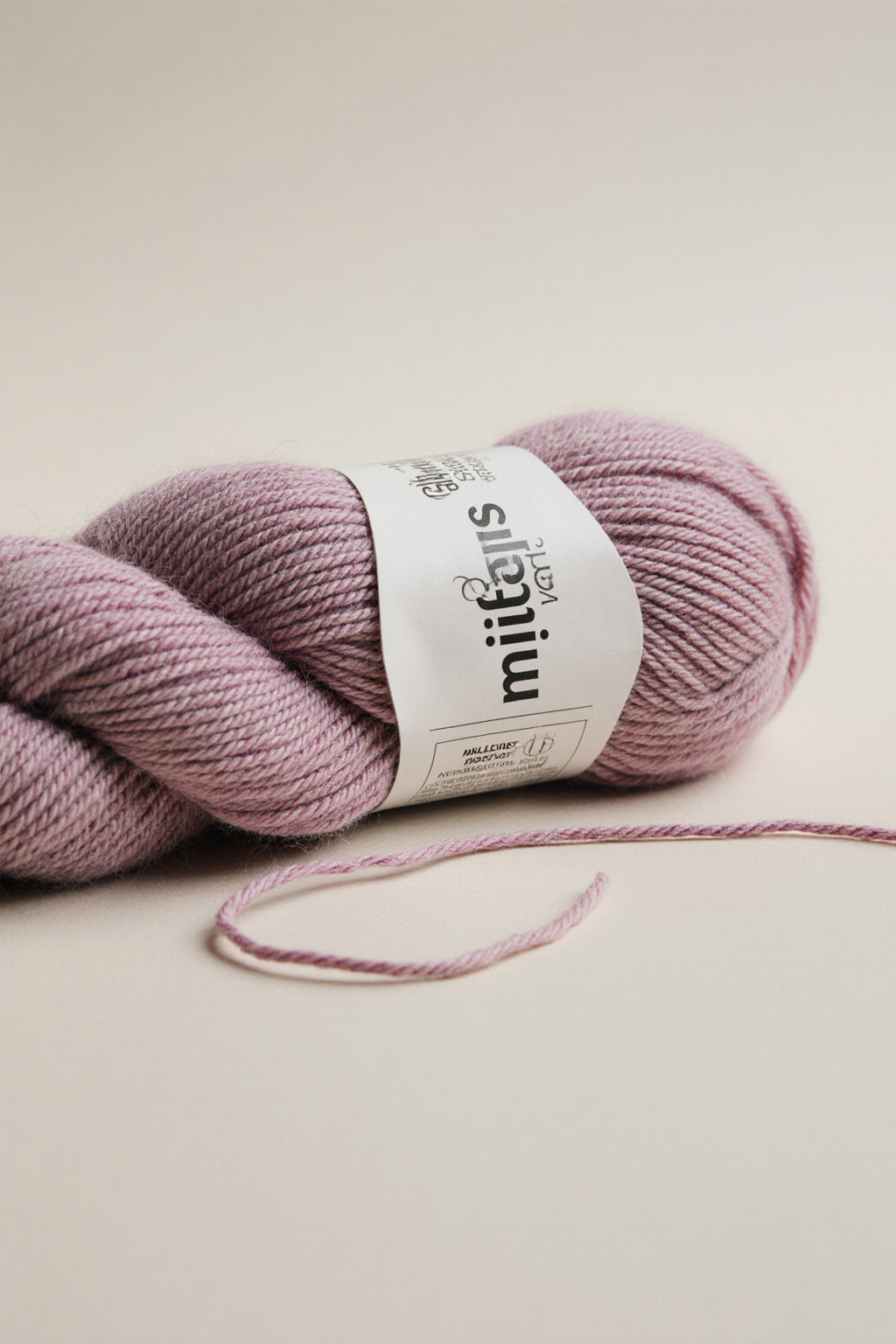
Worsted weight, category 4, sits at the point where a stitch is big enough to see and small enough to behave normally. Bulky yarn is fast and flatters nobody: every tension flaw shows, and the needles are heavy in the hand for hours. Fingering weight is beautiful and takes four times as long to show any progress.
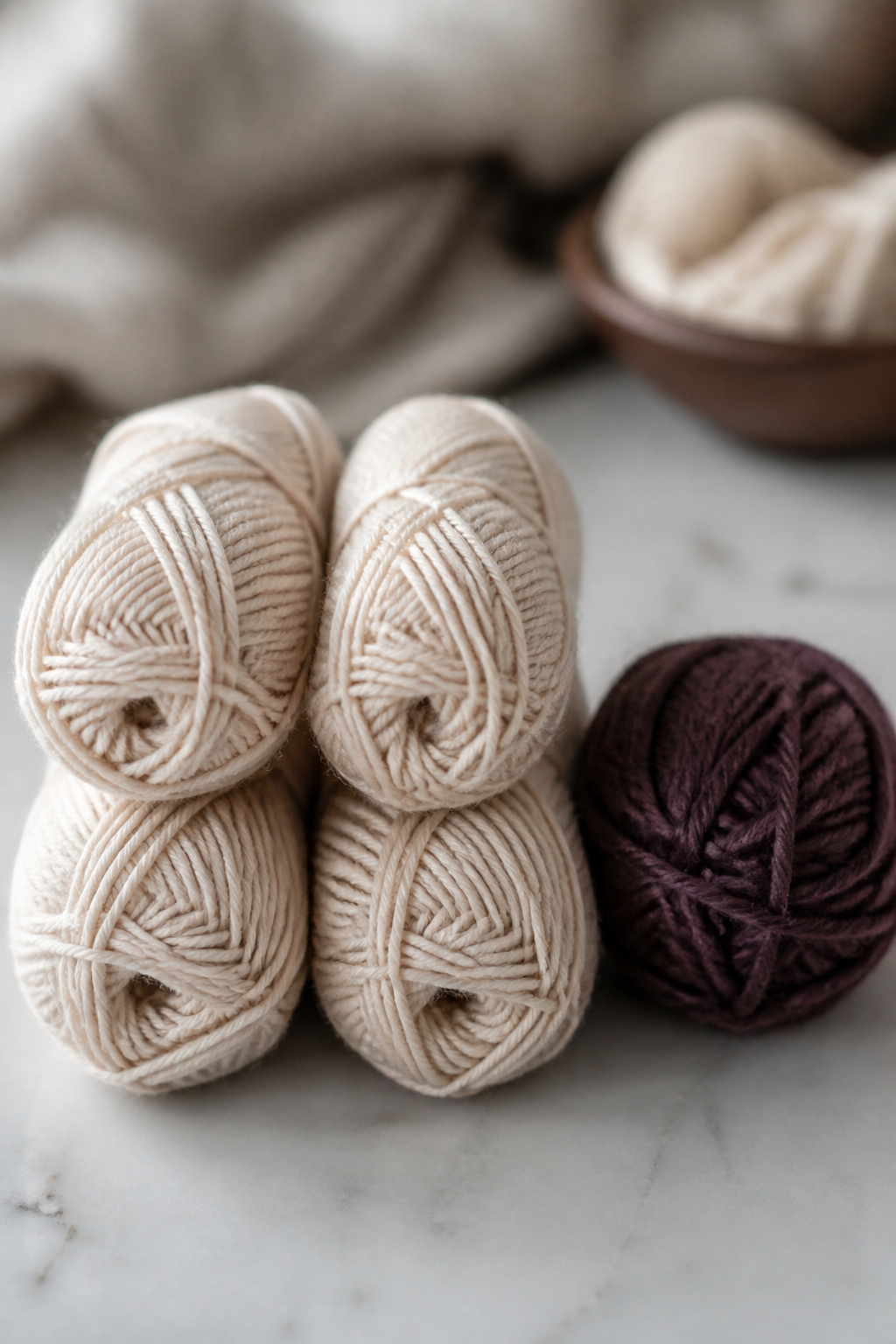
Now the fiber
Wool first, if there is no reason against it. Wool is elastic, which means it forgives uneven tension by pulling the stitches into line; it grips itself, so stitches stay where they are put; and it improves visibly after a wash, which is encouraging at exactly the moment encouragement is needed.
Where wool is impossible, because of an allergy or because the finished object will go through a washing machine belonging to somebody else, a wool and acrylic blend or a superwash wool keeps most of the working qualities. Pure acrylic is workable but unforgiving: it has little memory, so uneven tension stays uneven, and it cannot be improved by blocking.
Cotton is the hardest common fiber to learn on. It has no stretch, so it transmits every movement straight into the wrists, and a mistake in cotton stays visible. It makes excellent washcloths and difficult first scarves. The full comparison sits in the fiber table on the yarn label page.
What to leave on the shelf for now
- Mohair and other haloed yarns. They cannot be pulled back: the fibers lock together and a mistake becomes permanent.
- Single-ply superwash. Slippery and splitty at the same time.
- Novelty and eyelash yarns. No visible stitch structure at all.
- Very dark solids. See above.
- Slippery silk or bamboo on metal needles. The stitches leave the needle without being asked.
- Anything precious. The first ball becomes a swatch. Buy it accordingly.
Needles for the same project
Wood or bamboo, 5 to 5.5 mm. They grip the yarn just enough to stop stitches sliding off while you are looking somewhere else, and they are quiet and warm in the hand. Metal is faster and better later, especially with sticky wool.
A circular needle of 60 to 80 cm, used back and forth like a pair of straights, is worth considering: the weight of the knitting sits in your lap rather than on your wrists, stitches cannot fall off the far end, and the same needle will work in the round later.
How much to buy
One 100 gram ball is enough to learn on and to make a hat or a small scarf. If the plan is a full length scarf, buy two or three at once and check that the dye lot numbers match, because a colour change halfway up a scarf shows as a hard horizontal line.
The first three projects, in order
- A swatch. Knit until the tension stops changing, then keep it and date it.
- A flat rectangle worth having: a washcloth in cotton, or a garter or seed stitch scarf. The scarf pattern is in the gallery of knit and purl fabrics.
- A ribbed hat in the round, which introduces circular knitting and decreases on something that takes an evening or two.
Added 12/09/2026. Two later entries use the same four adjectives in different places: a headcover as a first project for a golfer, and a first skein bought where the vegetables are sold.