Entry of
Buying yarn where the vegetables are sold
A farmers' market can sell real knitting yarn, in single-flock skeins beside the eggs. The questions to ask are the ones you already know from the ball band, plus a few about the sheep.
Yes, a farmers' market can sell real knitting yarn. Small flocks produce more fleece than their owners can wear, and the surplus turns up between the eggs and the early apples as single-flock skeins, sometimes millspun, sometimes handspun, always worth a squeeze. The questions that protect you are the same ones the ball band answers, asked out loud. The magazine that follows family farms to the table covers farmers' markets and CSAs from the producers' side, which is the side a yarn buyer rarely gets to read.
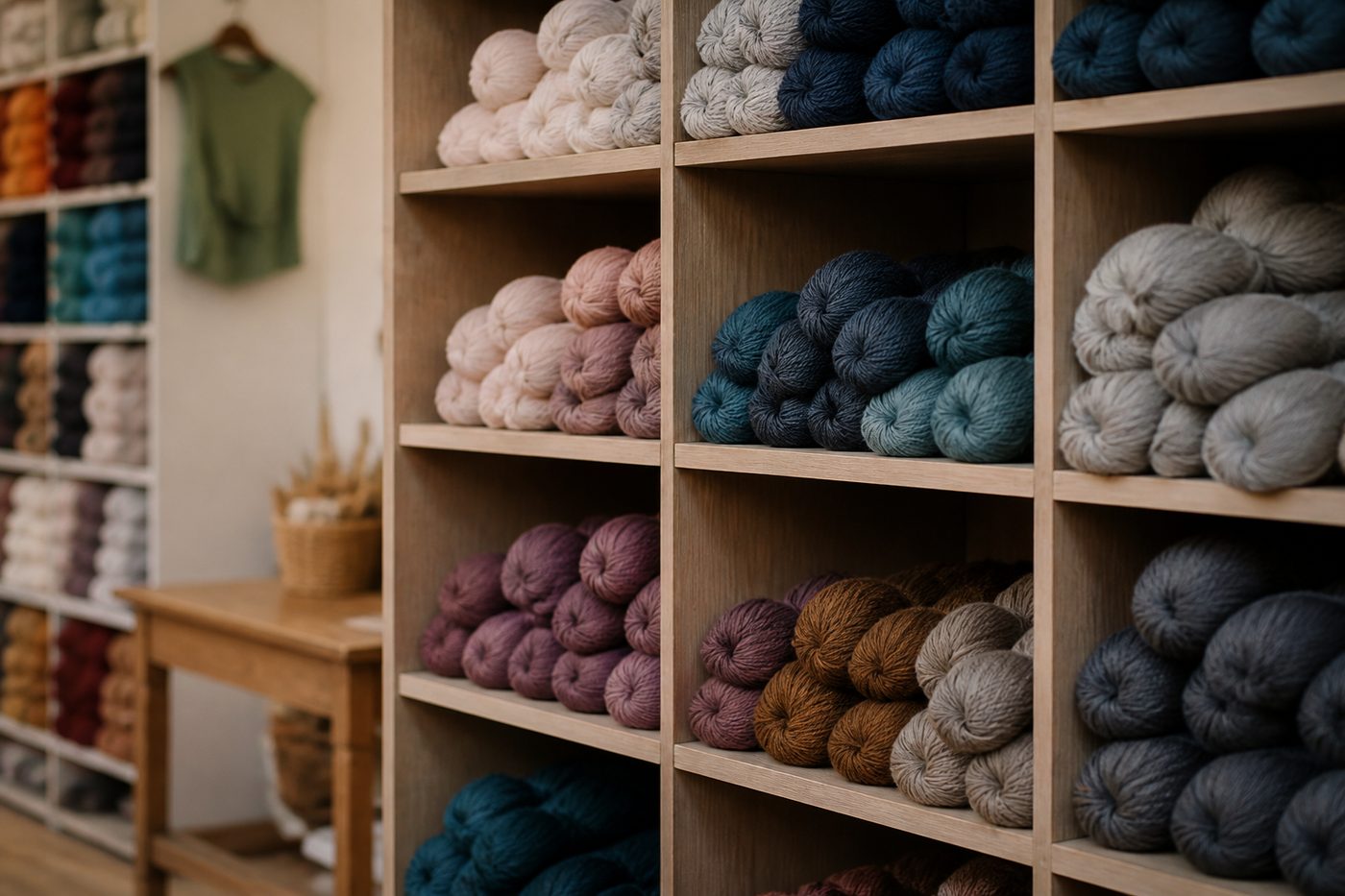
Can a farmers' market sell real knitting yarn?
It can, and the honest test is handling. Ask to unroll the skein across your palm the way you would in a shop: a market yarn should still tell you its weight category, its yardage and its fibre, even if the answer is a hand-written tag. Breed-specific wool is the common find, a Bluefaced Leicester or a Shetland sold by the person who knows the flock, and it often wears harder and smells better than anything in a plastic bag.
The things that occasionally go missing are dye-lot discipline and consistent spinning, so buy the whole project at once and knit a swatch before you commit a sweater to a fleece you have met once. The label-reading habit from what a yarn label tells you transfers directly; the tag is shorter, the questions are the same.
What should you ask a small-scale fleece producer?
Start with the sheep: which breed, whether the wool was spun at a mill or by hand, and whether the fleece was scoured before spinning or spun in the grease, because that changes both the feel and the first wash. Then the practical numbers: yardage per skein, suggested needle size, and how big the dye lot really is. A good producer will also tell you how the yarn wears, because they have watched it come back to the stall.
How does a fibre share actually work?
Like a vegetable box with a longer memory. You pay in spring, when the sheep are still in their coats, and collect at shearing or after the mill run: a share of the clip as roving or finished yarn, sometimes with the flock named on the tag. It suits a knitter who likes a project with an address.
The questions that keep that relationship honest are the ones already listed above; they work on a fibre share exactly as they work at a stall.
Sources
For how farmers' markets are organised and where they are listed, see the Agricultural Marketing Service of the USDA.
One more page on the same question: reading a breed and a clip.
One more page on the same question: what to check before ordering yarn.