Entry of
Pinning a flower on hand-knit: what the fabric will forgive
A pin marks a hand-knit because stitches are loops under tension: pierce the yarn and a run appears. Between the stitches, or on a magnet, the fabric forgives.
A pin marks a hand-knit because the fabric is a row of loops under tension. Pierce the yarn itself and a cut filament turns into a run that climbs like a dropped stitch in reverse. Go between the stitches on a firm fabric, or take the pin out of the question with a magnet, and the hand-knit forgives you entirely. The corsage trade has this down to a method: Het Bindpunt, the Dutch reference on corsage work, describes the two ways of mounting a corsage magnet on fabric, glued into a leaf backing or worked around the binding point.
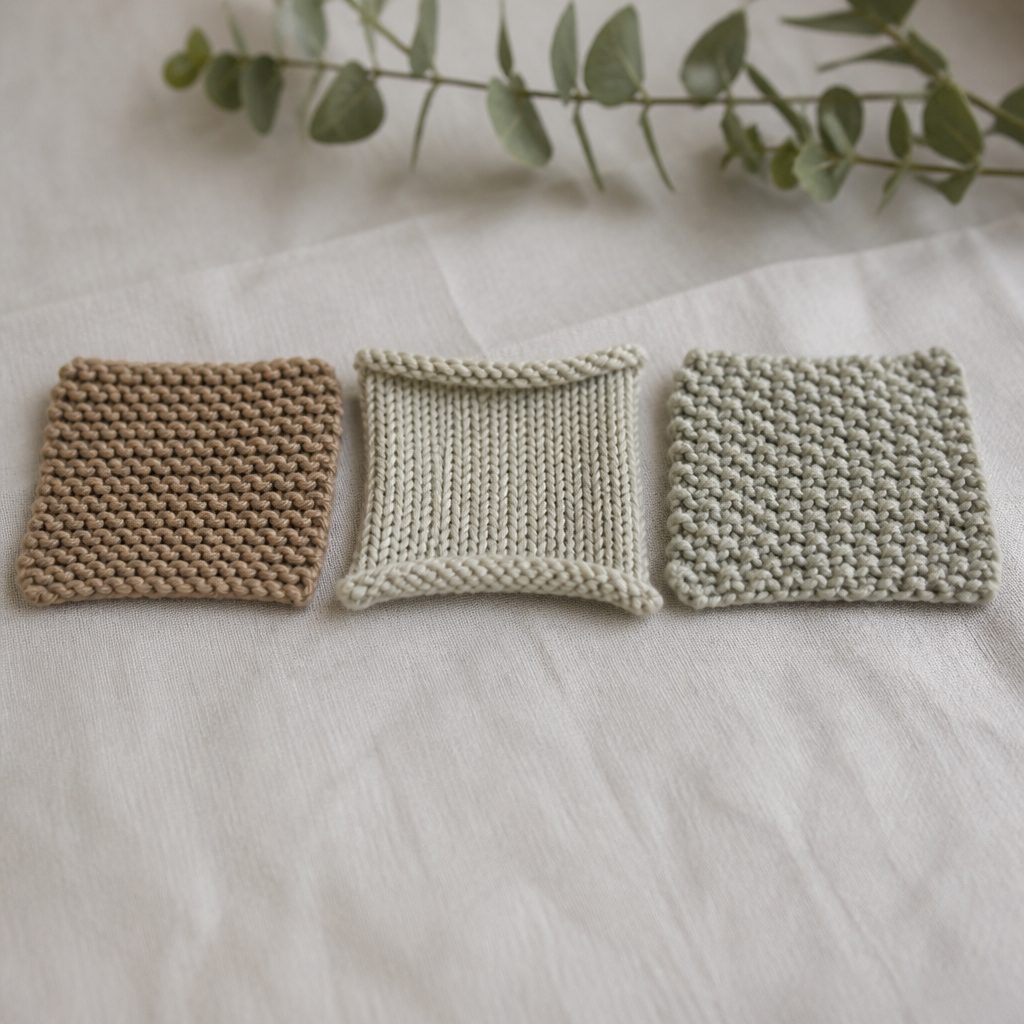
Why does a pin mark a hand-knit?
Because a knitted fabric has no spare threads. In a woven cloth the needle can slide between warp and weft; in a knit, the pin either finds the gap between two loops or it goes through a strand that the whole row depends on. A snapped ply is not a hole yet, but it is the start of one, and it always starts where everyone is looking.
On a firm stockinette or a tight garter, the gap method works: pass the pin between stitches, twice, so the load sits on the loop structure rather than on a single ply. On anything looser, the fabric itself gives you the warning: if the stitch you aim at visibly moves when you touch it, the fabric is telling you the answer.
When is a magnet the kinder option?
On open fabric, on mohair, on silk blends and on anything knitted at a loose gauge, the magnet wins because it never touches a ply. The flower is wired to a small disc or plate that meets its partner through the cloth, and the whole attachment happens without a puncture.
The same reference is plain about where the fastening lets go: a magnet strong enough to hold a rose through a chunky cardigan will also hold a seam allowance out of shape, so match the magnet to the weight, not to the optimism.
How heavy can a wearable flower be?
Lighter than it looks on the table. A wired spray rose with its tape and backing sits around twenty grams, and twenty grams hanging from a single stitch will drag a visible dent into a loose knit by the end of a ceremony. The fix is to spread the load: two points of attachment on a firm fabric, or one magnet on a looser one, and always a rehearsal on a swatch pinned to a cushion before the real garment carries the real flower.
If the flower is part of a gift, the counting habit from knitted gifts you can actually finish in time applies to the finishing hour as well: a corsage mount takes longer than it looks, and it deserves a line in the plan. The fabric behaviours involved are the ones catalogued in the gallery of knit and purl fabrics.
Sources
For how historic dress and knitted textiles are handled and fastened, see the conservation notes of the Victoria and Albert Museum.