Entry of
Knitted gifts you can actually finish in time
The reliable way to know whether a gift will be ready is to count the stitches in it, then find out how many stitches an hour you actually knit.
Every December, knitters underestimate. Not by a little: by half. The cure is arithmetic done before casting on, because a project's size is knowable in advance and a knitter's speed is measurable in two minutes.
Count stitches, not hours
The number of stitches in a project is simply the stitches per row multiplied by the number of rows. Both come from the gauge and the finished measurements, which means both are available before any yarn is bought.
Then measure your own rate. Set a timer for two minutes, knit plainly, count what you made, and multiply. Most people land somewhere between 20 and 40 stitches a minute once a pattern is familiar, and the spread within that range is what makes general estimates useless. Use your number.
Two things fall out of those numbers straight away. A scarf is not the quick gift its reputation suggests: it holds nearly three times the stitches of a hat. And socks are not the impossible gift they are made out to be, they are simply a scarf with a heel in the middle.
The three things that eat the calendar
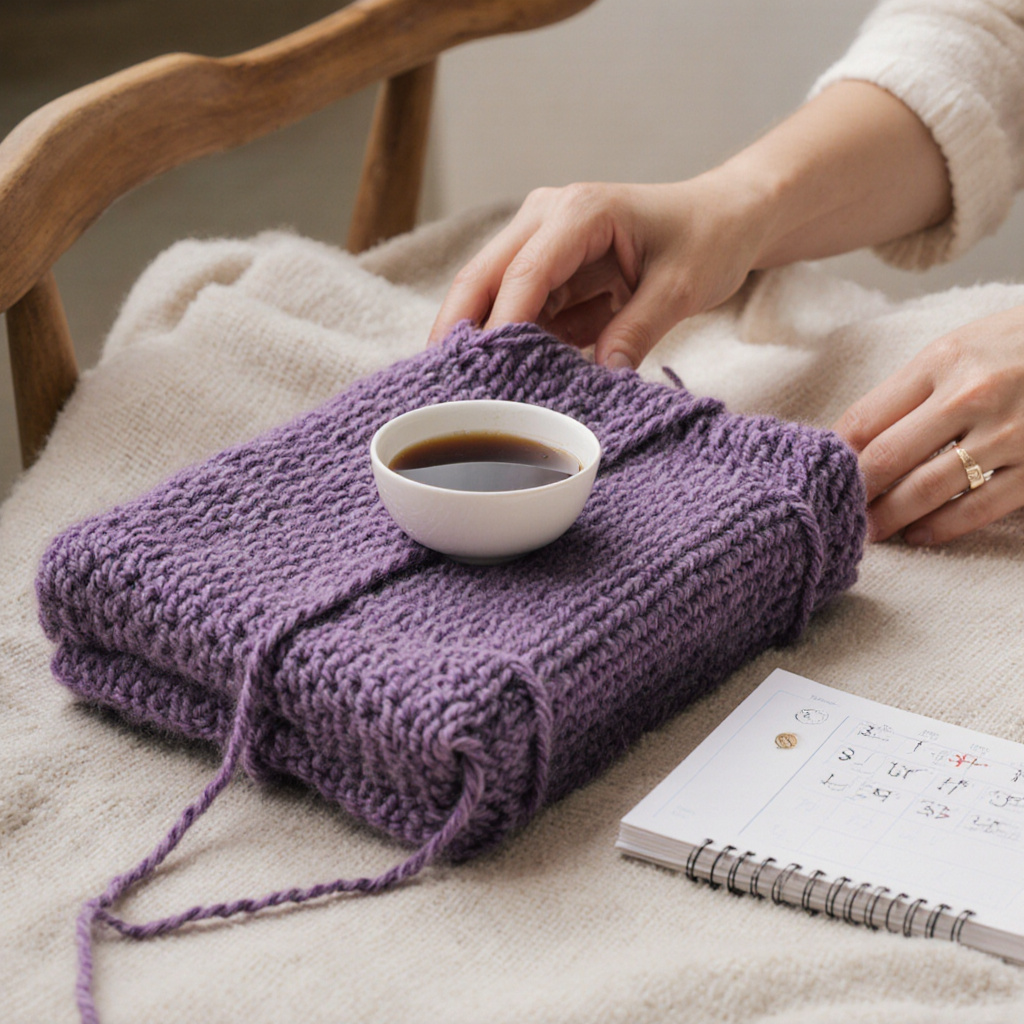
- Finishing. Seaming, weaving in ends, sewing on buttons. On a sweater this is hours, not minutes, and it always happens at the end when time has run out.
- Blocking and drying. Twenty-four to forty-eight hours that cannot be compressed, as set out in the entry on blocking. The deadline is the day the gift must be dry, not the day it is given.
- Reknitting. Assume one section will be redone. It usually is.
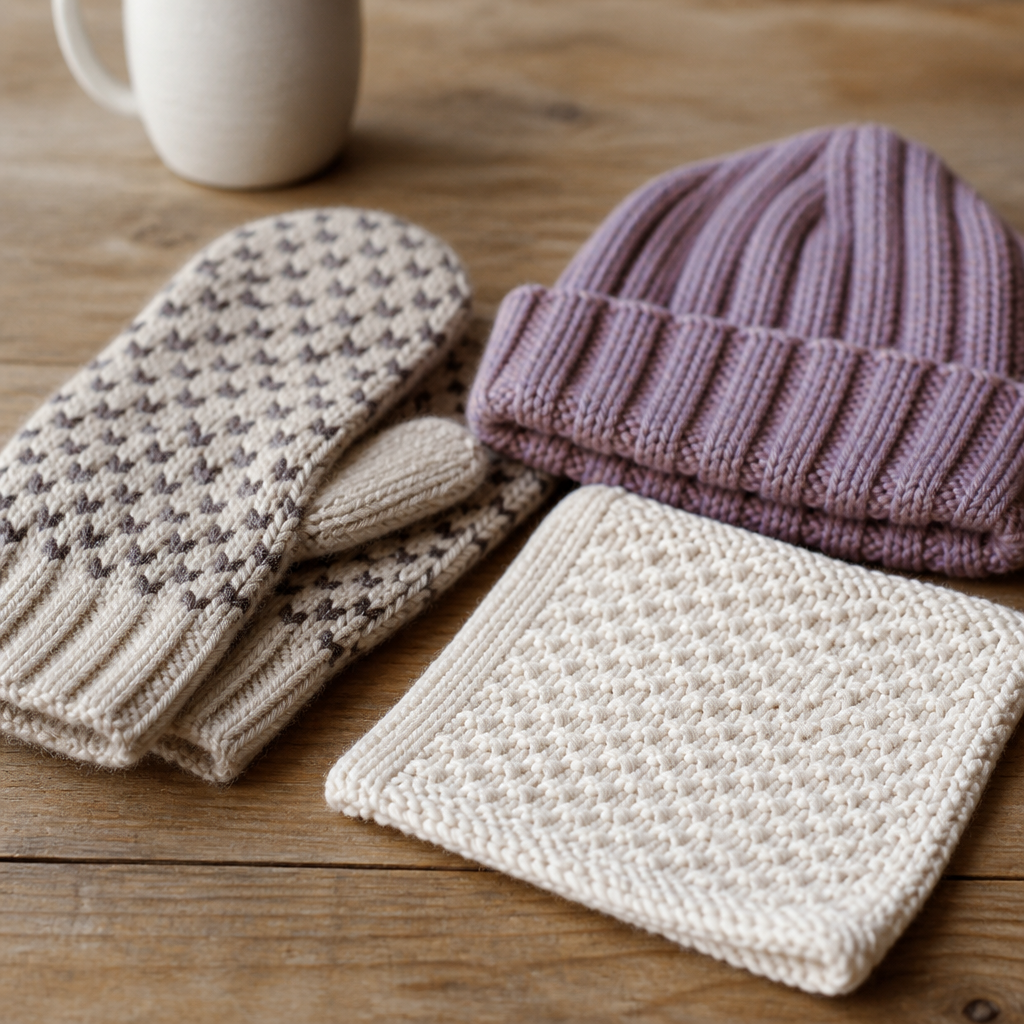
Gifts that finish
- Washcloths in cotton. An evening each, useful, and cotton is the right fiber for once.
- A ribbed hat. Fits almost anybody, no seams, and rib forgives a gauge that is slightly off.
- Fingerless mitts. Half a mitten, no thumb shaping to speak of, and sizing barely matters.
- A cowl in bulky yarn. A tube. It cannot be the wrong length, because it has no ends.
- Mittens. Small, warm, and the technique is worth having: see mittens on double-pointed needles.
Gifts that do not, unless you start early
An adult sweater, stranded colourwork mittens, a lace shawl and any blanket belong to a different category. A blanket is the clearest case: a throw at 4.5 stitches per inch and 6 rows per inch, 45 by 60 inches, comes to roughly 200 stitches across and 360 rows, which is 72,000 stitches. At 30 a minute that is forty hours of knitting. Start it in January.
Fitting something you cannot measure
Hats, cowls, mitts and blankets forgive. Socks and sweaters do not. If the recipient is not available to be measured, either choose a forgiving object or ask for one number: head circumference for a hat, foot length for socks, and the chest measurement of a jumper they already like for a sweater.
Choosing yarn for someone else's washing machine
A hand-wash-only gift is a gift with homework attached. If the recipient will not hand wash, use superwash wool or a wool and acrylic blend, and say so. Give the ball band with the present, or copy the care symbols onto a card: it is the only record of how the thing should be treated, as explained in the entry on reading a yarn label.
Consider the wearer too. Some people cannot tolerate wool against the neck; merino, alpaca or a soft blend solves it, and a hat lining does the rest.
The two week rescue plan
- Pick something with no shaping and no seams: a cowl, a hat, a pair of mitts.
- Go up a yarn weight. Bulky halves the stitch count for the same area.
- Knit in the round so there is nothing to sew.
- Block on day twelve, not day fourteen.
- If it is not going to be finished, wrap the yarn, the pattern and the needles with a note. It is a better gift than a rushed one, and everyone knows it.
Added 12/09/2026. Two September entries continue the same arithmetic: a square of blanket for an old dog beside the knitting chair finishes itself, and a project that travels between two houses is the gift that crosses a threshold every Friday.
One more page on the same question: cloth for the homebrew shelf.
One more page on the same question: small knits for the drinks tray.