Entry of
Crochet or knitting first? What actually differs for a beginner
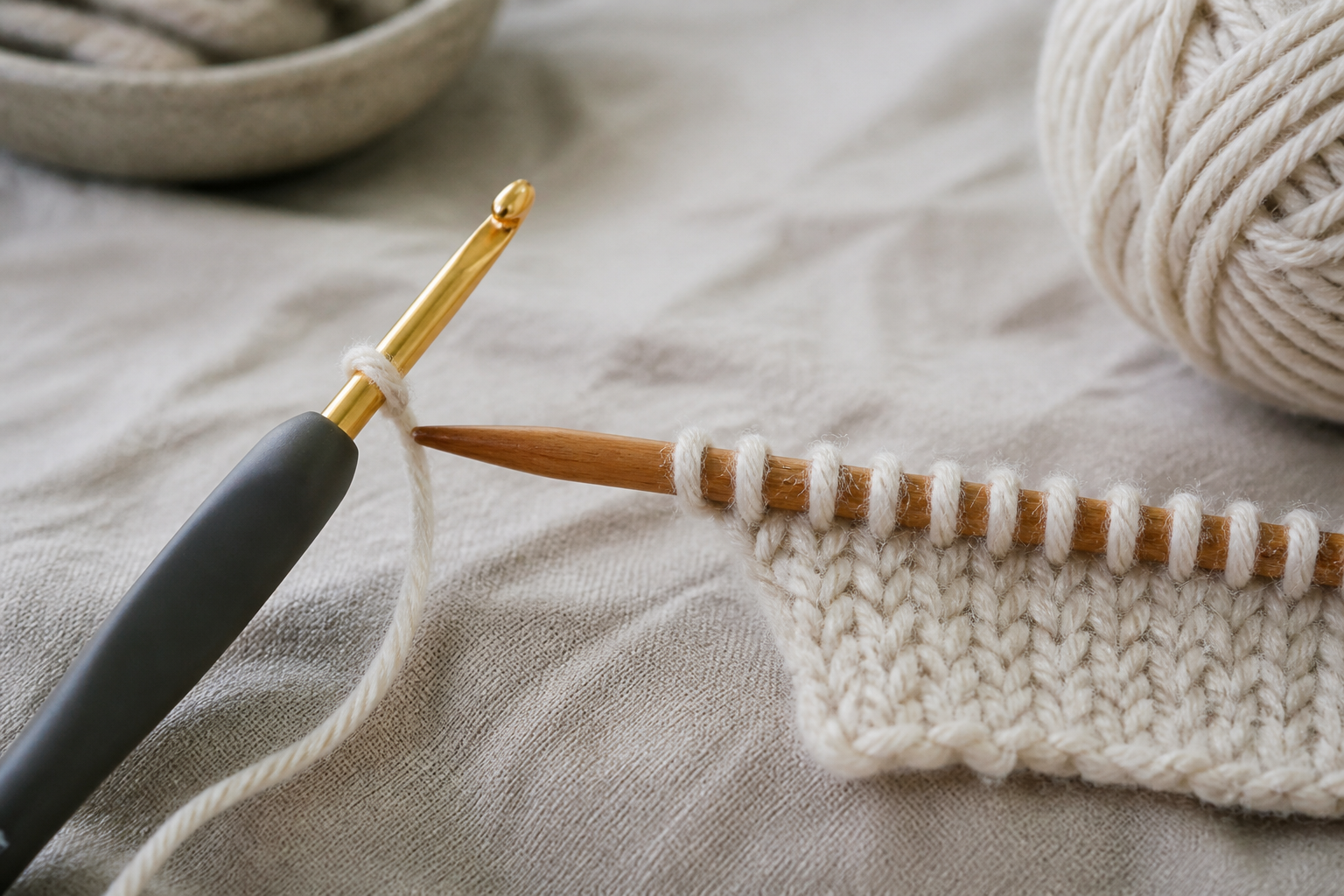
One hook holding a single loop, against two needles holding a whole row of them. Almost every practical difference between the two crafts comes from that.
The question is usually asked as if one craft were easier. It is more useful to ask what each one does, because the answer decides both how it feels to learn and what you will be able to make afterwards.
The structural difference
In knitting, an entire row of live loops sits on the needle at once, and each loop is held only by the loop above it. That is what makes knitted fabric elastic, and it is also why a dropped stitch runs down through the work.
In crochet, only one loop is live at any moment. Every stitch is completed and locked before the next one starts. Nothing can run. Pulling the yarn undoes the work stitch by stitch, in order, as fast as you like, and then you carry on.
| Point | Knitting | Crochet |
|---|---|---|
| Tool | Two needles | One hook |
| Live stitches | A whole row | One |
| Cost of a mistake | Stitches can run; repair or rip back | Pull the yarn, it undoes and stops |
| Fabric | Thinner, drapier, elastic | Thicker, denser, stiffer |
| Yarn for the same area | Less | Roughly a third more |
| Speed for the same area | Slower | Faster |
| Basic moves to learn | Two: knit and purl | A family: chain, slip, single, half double, double |
| Strongest at | Garments, socks, ribbing, colourwork | Blankets, toys, edgings, motifs, hats |
Which is easier to start
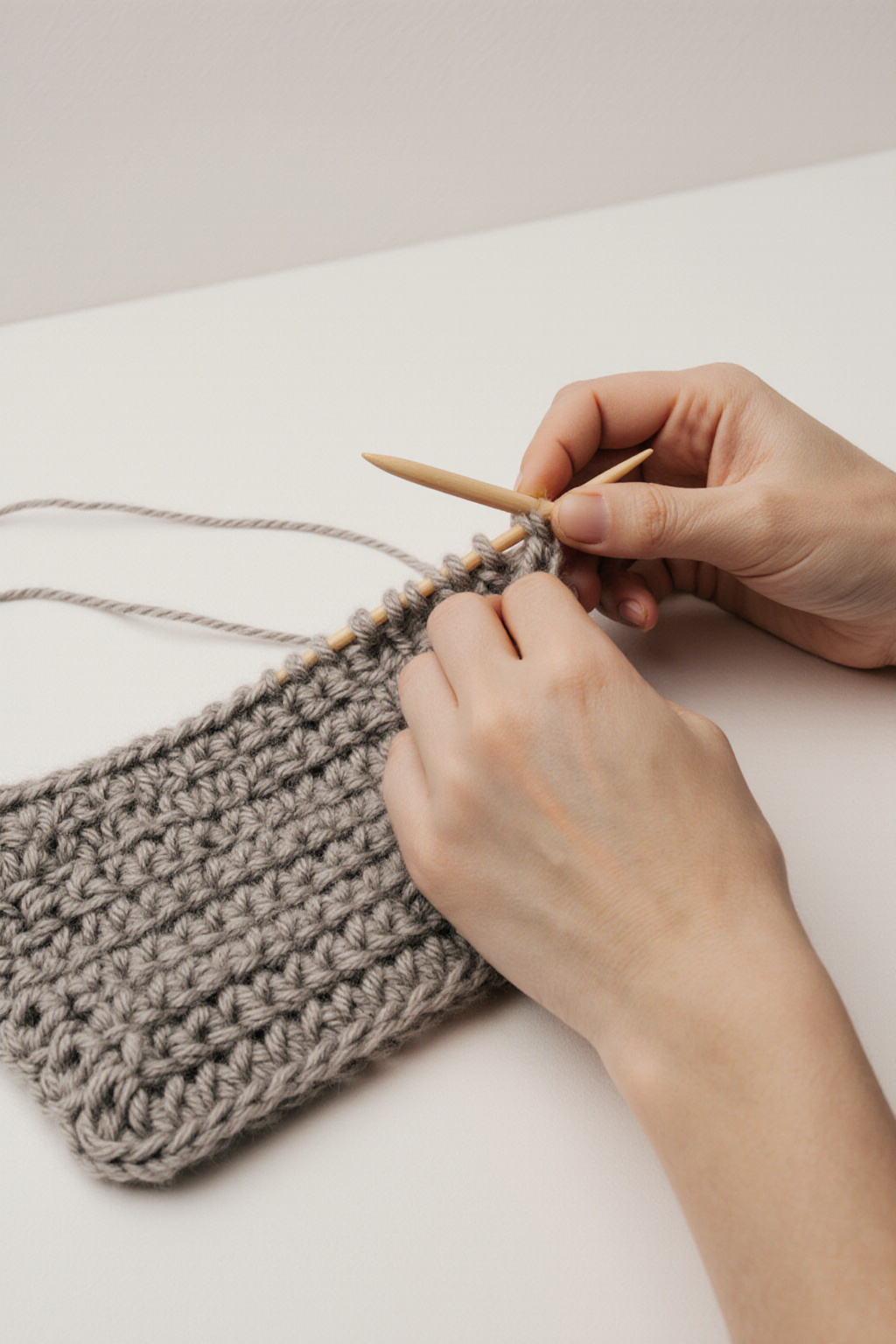
Crochet usually reaches a finished object sooner. The work cannot unravel by accident, one hand does most of it, and a beginner can undo an hour of mistakes in ten seconds without fear. For someone who has been discouraged before, that matters more than any other argument.
Knitting has fewer basic movements. The entire craft is knit and purl, arranged in different orders, which is why four completely different fabrics come out of two stitches. What takes longer is the coordination: two needles, a live row, and a tension that has to travel evenly across all of it.
The honest answer is that neither is easier in general, and the one that suits you is the one you will pick up again on a Wednesday evening. Anyone who has abandoned one should try the other before concluding that they cannot do handwork.
What the fabric decides
Some things only one craft does well. Elastic ribbing that pulls in and springs back is a knitted structure; crochet cannot match it, which is why crocheted sock cuffs and jumper hems are always a compromise. Dense, opaque fabric that holds a three-dimensional shape without stuffing showing through is a crochet structure, which is why toys are crocheted.
For blankets, crochet is faster and warmer, and knitting gives a lighter and drapier result. For garments meant to be worn close to the body, knitting wins on both drape and fit.
Hands, and comfort
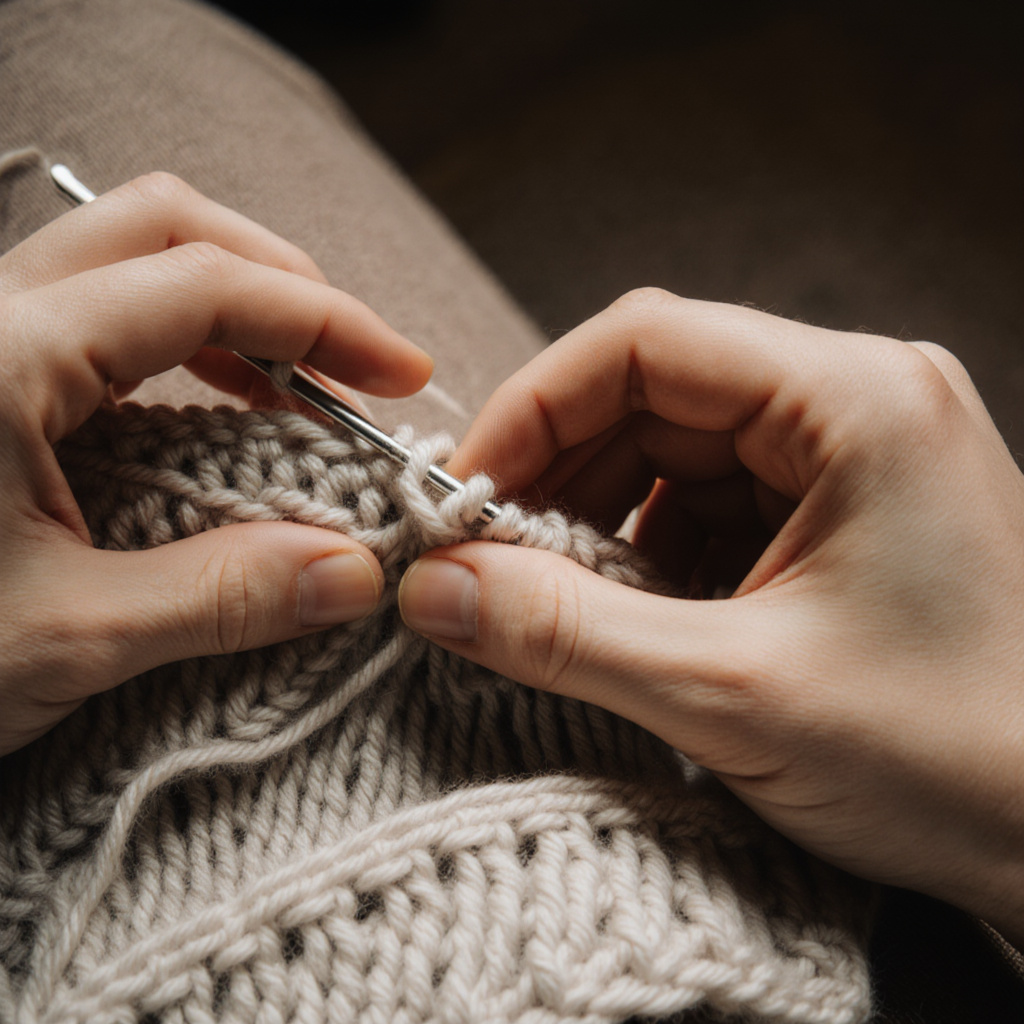
Crochet loads one hand and one wrist; knitting shares the work between both. People with reduced grip or pain in one hand often find one of the two clearly more comfortable, and there is no rule about which. Try both for twenty minutes before deciding, ideally on a thicker yarn with a larger tool.
The yarn is the same
Both crafts buy from the same shelf, and ball bands list a recommended hook size alongside the needle size. One useful rule: at the same yarn weight, crochet makes a thicker fabric, so the hook used is often one or two sizes larger than the needle would be. Everything else on the band means the same thing for both, as set out in the entry on reading a yarn label.
If you plan to knit, learn the hook anyway
A crochet hook is a knitter's repair tool. It is what picks up a dropped stitch, what makes a provisional cast-on, what tidies an edge with a row of single crochet, and what hauls a yarn end back through a seam. Half an hour with a hook is worth it even for someone who never intends to crochet a whole row.
Added 12/09/2026. Two September entries follow on: a fibre share beside the vegetable box for where yarn can be bought, and what a pet household does with the leftovers for where the scraps end up.
One more page on the same question: 1980s pattern leaflets and acrylic yarn.