Entry of
1980s Knitting: Leaflets, Acrylic Yarn, Oversized Knits
A practical look at 1980s knitting: synthetic fibres, bright colours, pattern leaflets and magazines, and what today's knitter can still borrow from those
The 1980s in knitting meant three things above all: synthetic fibres, strong colours, and a loose, oversized fit. Acrylic and acrylic blends dominated the shelves because they were cheap, machine washable and sold in every department store. Pattern leaflets and magazines carried the designs to knitters, and many of those shapes still work today if you change the yarn.
Which fibres and colours define 1980s knitting?
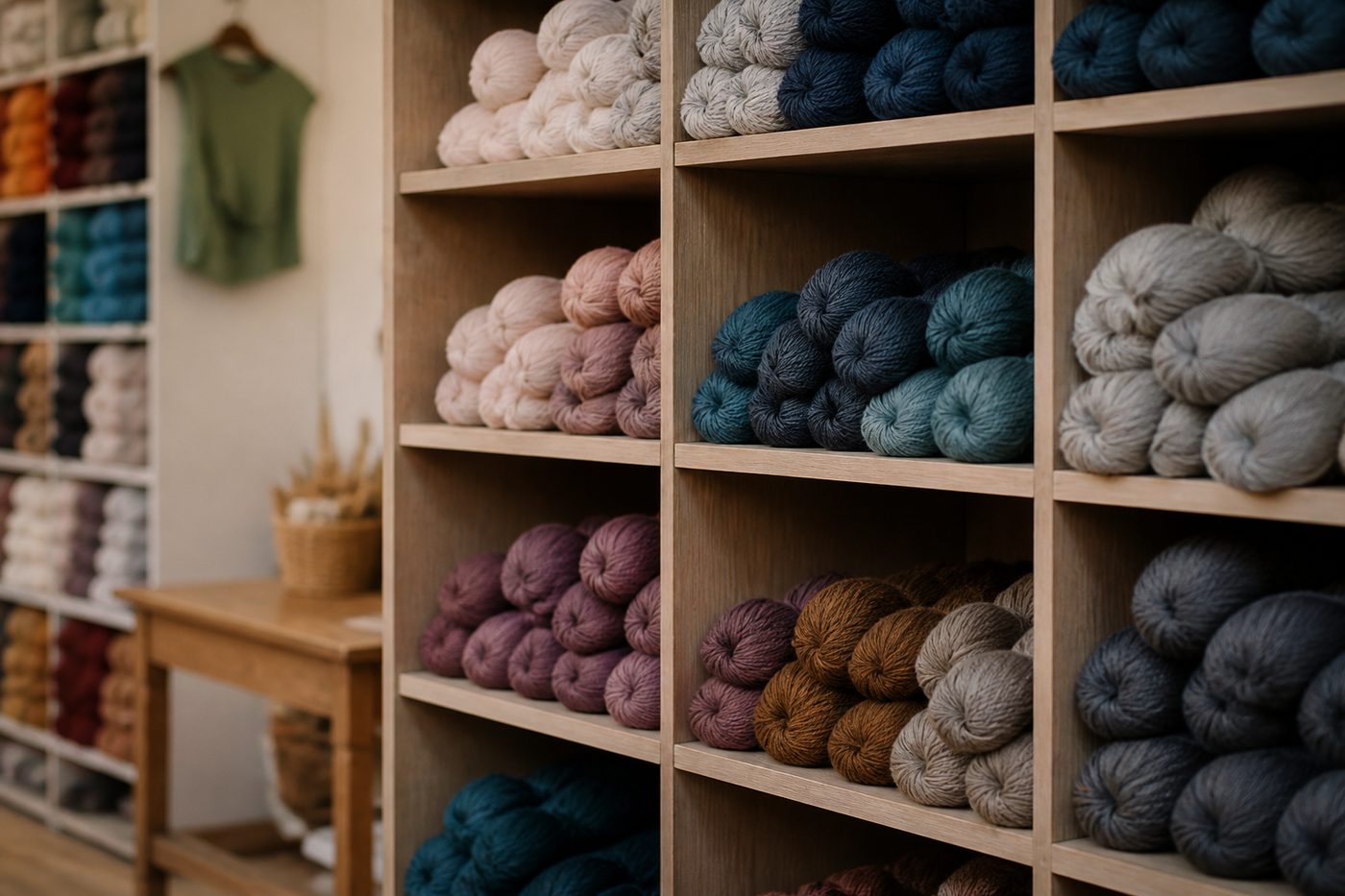
Acrylic was the backbone. A skein of worsted acrylic cost a fraction of wool, came in dozens of dye lots, and survived the washing machine. Blends followed: acrylic with wool for warmth, acrylic with mohair for a halo, and straight nylon for socks and children's clothes. Cotton stayed in the shops but took second place for winter garments.
The colours were loud on purpose. Think magenta, teal, mustard, cobalt, and a bright coral that showed up in almost every pattern book. Neons arrived around the middle of the decade, often as stripes on a black or white ground. Pastels ran alongside them, especially for baby sets: mint, lemon, baby pink.
Variegated and self-striping yarns were popular for the same reason they are now. They made a plain stocking stitch look busy without extra work. A common 1980s sweater used one solid colour for the body and a contrast yarn for the yoke, the cuffs and the collar band.
If you want to read how the decade itself was documented, in objects and everyday habits rather than in knitting alone, the French magazine Reference 80 keeps a chronology of thirty markers between 1980 and 1989. It is a useful check when you are dating a pattern leaflet and want to know what else was on the shelf that year.
How did pattern leaflets and magazines reach knitters?
Three channels, mostly.
First, the yarn company leaflet. You bought it at the counter, often for the price of a stamp or for free with the yarn. It was a single folded sheet, printed on both sides, with one or two designs and a small chart. Sizes ran from 32 to 42 inches bust in most cases. The yarn was named on the front, and the shade numbers were listed inside.
Second, the monthly magazine. Titles like these sat next to the sewing patterns in newsagents. Each issue carried eight to fifteen designs, a letters page, a small advice column, and adverts for the next issue. Readers wrote in for back copies. Many knitters kept a folder of torn-out pages, and those folders are what turn up today in house clearances.
Third, the shop. In a physical yarn shop, the owner decided what to stock and what to display. A good owner knew which leaflets sold and which yarns pilled. She would tell a customer to go down a needle size, or to buy one extra ball for the collar. That advice was not written on the leaflet. It was spoken across the counter, and it is the part that never got archived.
What can a knitter today still use from a 1980s design?
More than you would expect, if you separate the shape from the yarn.
Use the construction. Raglan sleeves, drop shoulders, set-in sleeves with a shallow armhole, and a straight body knit in one piece from the hem up: these are all sound. A drop-shoulder sweater is the easiest first garment there is, because there is no armhole shaping to get wrong.
Use the colourwork charts. Many 1980s yokes and borders were charted on a grid, and a grid is a grid. You can lift a diamond band or a chevron and put it on a modern sweater without touching the rest of the pattern.
Use the sizing notes. Pattern leaflets from that period often gave finished measurements as well as body measurements, which is more than some modern patterns do. Measure a sweater you already own and like, then compare.
Change the yarn. This is the main adjustment. A modern wool, a wool and alpaca blend, or a cotton and linen blend will give the same shape a different drape and a different weight. Check the metreage per 50 grams on the old leaflet and match it, not the brand. If the old yarn was 90 metres per 50 grams and your substitute is 110, your sweater will come out smaller.
Change the ease. The 1980s oversized fit meant 4 to 8 inches of positive ease on a woman's sweater, sometimes more. If you want a closer fit, go down one size in the pattern rather than rewriting the maths.
What about the oversized knit itself?
The oversized silhouette was not only a fashion choice. It was practical. A loose sweater fits over a shirt. It covers the hips. It does not need to be blocked to the inch. It also forgives a slightly uneven tension, which matters when you are knitting with a stiff acrylic on metal needles.
Typical features of the period:
- Body length to the top of the thigh, sometimes longer.
- Sleeves wide at the cuff, often with a ribbed band that is not tight.
- A deep V neck or a wide boat neck.
- Shoulder seams that sit well past the shoulder bone.
- Ribbing at the hem in 2x2 or 3x3, not 1x1.
If you knit one today, choose a yarn with some memory. A pure cotton will stretch under its own weight in a long body. A wool or a wool blend holds the shape better. Keep the gauge loose, around 18 to 20 stitches to 4 inches on 4.5 mm to 5 mm needles, and the fabric will have the right hand.
How do you date a leaflet you have found?
Look at four things.
- The bust sizes. If the largest is 40 or 42 inches, it is likely early to mid decade. Later leaflets added larger sizes.
- The yarn names. If the recommended yarn is discontinued, search the name plus the word "shade card" and you will often find a date.
- The photography. Studio shots with a plain coloured background and a single model are typical of the early 1980s. Location shots with a garden or a staircase come later.
- The price. A leaflet marked at 35p or 50p sits in the first half of the decade in the UK. Prices moved up after that.
None of this is exact, but it narrows a leaflet to two or three years, which is enough when you are matching it to a yarn weight.
What to do with a 1980s pattern this week
Pick one leaflet. Read the finished measurements, not the size on the front. Find a modern yarn with the same metreage per 50 grams. Knit a swatch of 20 stitches by 20 rows, wash it the way you will wash the sweater, and measure it dry. Then decide whether you want the original ease or less.
That is the whole method. The 1980s gave us a large supply of simple, well-charted, generously sized patterns. The yarn has moved on. The shapes have not.
Sources
For reference, see vam.ac.uk.