Entry of
Buying yarn online: what to check first
Dye lots, gauge, weight and yardage on a yarn product page, plus when a real shop is still worth the trip before you order a sweater's worth.
A sweater's worth of yarn is a large order. Before you pay, check four things on the product page: the dye lot, the gauge in stitches per 10 cm or 4 in, the weight category, and the total yardage against your pattern. If any of those four is missing, ask the shop before you order. A missing number costs less to fix by email than by return post.
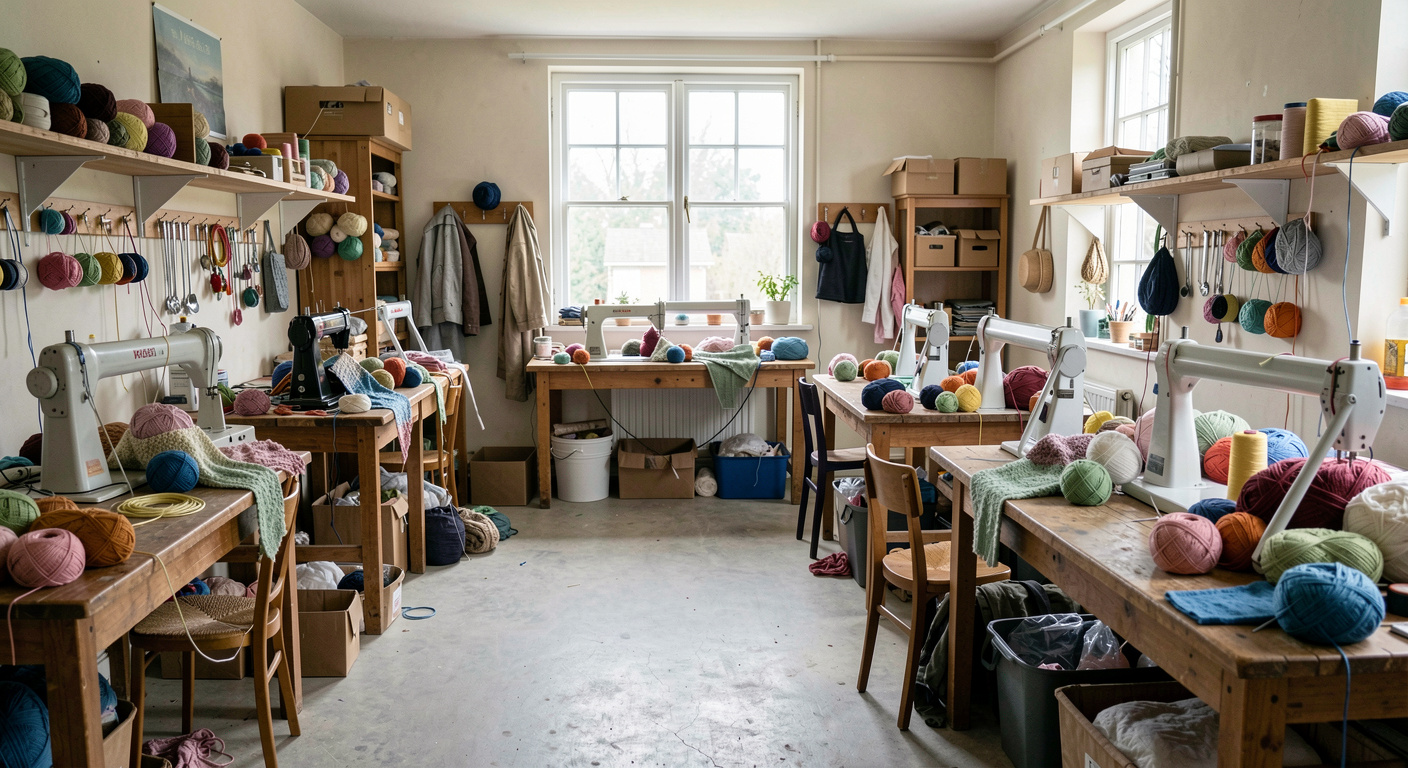
Match the dye lot before you click buy
Dye lots are the batches a mill dyes at one time. Two skeins from the same lot match. Two skeins from different lots can sit a shade or two apart, and on a plain stockinette body that difference shows as a stripe across the chest.
On a product page, look for a lot number or a note that says the skeins ship from one lot. Some shops list it per colour; some do not list it at all. If it is not there, write and ask: how many skeins of this colour do you have in one lot, and can you hold them? A shop that sells yarn by the skein knows this question. It is the same question we ask at the counter when someone buys ten balls at once.
If you must mix lots, plan for it. Alternate skeins every two rows on the body and every row on the sleeves. That blends the shades. It also doubles the ends to weave in, so decide before you cast on, not after.
One more check: order one extra skein. A sweater's worth is a big commitment, and a single spare in the same lot saves a whole project if your gauge drifts or a sleeve runs long. The same discipline applies to any large online order, whether it is yarn or a case of soap: confirm the batch, confirm the quantity, then pay. Readers who want the wider picture of how online ordering changed after 2020, including batch and stock problems, can start with this digital commerce reporting and work back to the product page with better questions.
What do gauge, weight and yardage mean on a product page?
These three numbers are not the same thing, and shops sometimes use them loosely.
Weight is a category, not a measurement. Fingering, sport, DK, worsted, bulky: these are bands, and the bands overlap. Two DK yarns from two mills can knit at different gauges. The word on the label tells you roughly what family you are in. It does not tell you what needle to use.
Gauge is the real number. It is stitches and rows per 10 cm or 4 in, measured by the mill on a swatch. A page that says 22 stitches and 30 rows to 10 cm in stockinette is giving you something you can act on. Compare it to the gauge in your pattern. If your pattern wants 20 stitches and the yarn gives 22, the fabric will be denser and the sweater smaller unless you change needles or size.
Yardage is what you buy. Patterns list metres or yards, not skeins, because skein length varies. A 50 g ball can hold 100 m or 200 m depending on fibre and thickness. Multiply the skeins by the length per skein and compare to the pattern's total. Then add 10 percent. Running out in the second sleeve is the most common way a sweater stalls for a month.
If the page gives weight but no gauge and no length, that is not enough to order from. Ask, or buy elsewhere.
How do you match a dye lot when buying online?
You match it by treating the lot as a fixed quantity and the colour as a variable. Ask the shop how many skeins it holds in one lot of your colour. If the answer covers your project plus one, order all of it in one go. Do not order six now and four next week; the second order may come from a new lot.
If the shop cannot confirm a single lot, ask for a photo of the skeins together in daylight. Most small shops will do this. A photo will not replace a lot number, but it catches the obvious mismatches.
When the yarn arrives, check the labels before you wind anything. Line the skeins up on a table in daylight and look along the row. If one is off, stop and contact the shop with the lot numbers. Unwound skeins with intact labels are easy to exchange. Cakes and balls are not.
When is a shop still worth the trip?
Go in person when colour is the deciding factor. Screens shift colour, and a rust that looks warm on a phone can arrive as a brown. If you are matching a sweater to a coat or a chair, take the thing with you and hold the skein against it under the shop's light and again near the door.
Go in person when you need one skein to finish. A shop can weigh a partial ball, match a lot from its shelf, and hand it to you the same day. Post takes days.
Go in person when you are buying a sweater's worth of an unfamiliar yarn. Squeeze it. Knit a few stitches on the shop's needles if they let you. Gauge on a label is a mill average; your hands are the final test.
Stay online when you know the yarn, know your gauge, and the shop has the lot. That is a restock, not a decision. Order it, keep the lot number in your notes, and get on with the knitting.
A short checklist before you pay
- Dye lot: one lot for the whole project, plus one spare skein.
- Gauge: stitches and rows per 10 cm or 4 in, in the stitch pattern you will use.
- Weight: the category name, understood as a rough band only.
- Yardage: total length per skein, multiplied out, plus 10 percent.
- Fibre and care: how it washes, whether it pills, whether it felts.
- Returns: the shop's policy on wound yarn, and the deadline.
Write the lot number on the pattern envelope or in your notes when the parcel arrives. Six months later, when you need one more skein for the collar, that number is the difference between a match and a near miss.
If the numbers do not add up
Do the arithmetic before you order, not after. Take the pattern's total yardage, add 10 percent, divide by the length per skein, and round up. Then check that number against the lot the shop has in stock. If the shop holds eight skeins in one lot and you need nine, you have three choices: pick another colour, accept two lots and alternate, or wait for a restock. All three are fine. Ordering nine and hoping is not.
A sweater's worth of yarn is a small budget and a long stretch of knitting time. Ten minutes with a calculator and one email to the shop is cheap insurance.
Sources
For reference, see craftyarncouncil.com.