Entry of
Knitting Races at Fairs: How Contests Work
How knitting competitions at fairs are timed and judged, what makes a contest fair, and how a first-time entrant should prepare wool, needles and gauge.
A knitting race is timed from the starter's call to the last bound-off stitch, and judges score the finished piece on gauge, evenness, seams and finishing, not on speed alone. Most fair contests run one of two ways: a fixed time limit where the fastest complete entry wins, or a fixed task where every entrant knits the same item and the best work takes the ribbon. Read the class rules before you enter, because the two formats reward different habits.
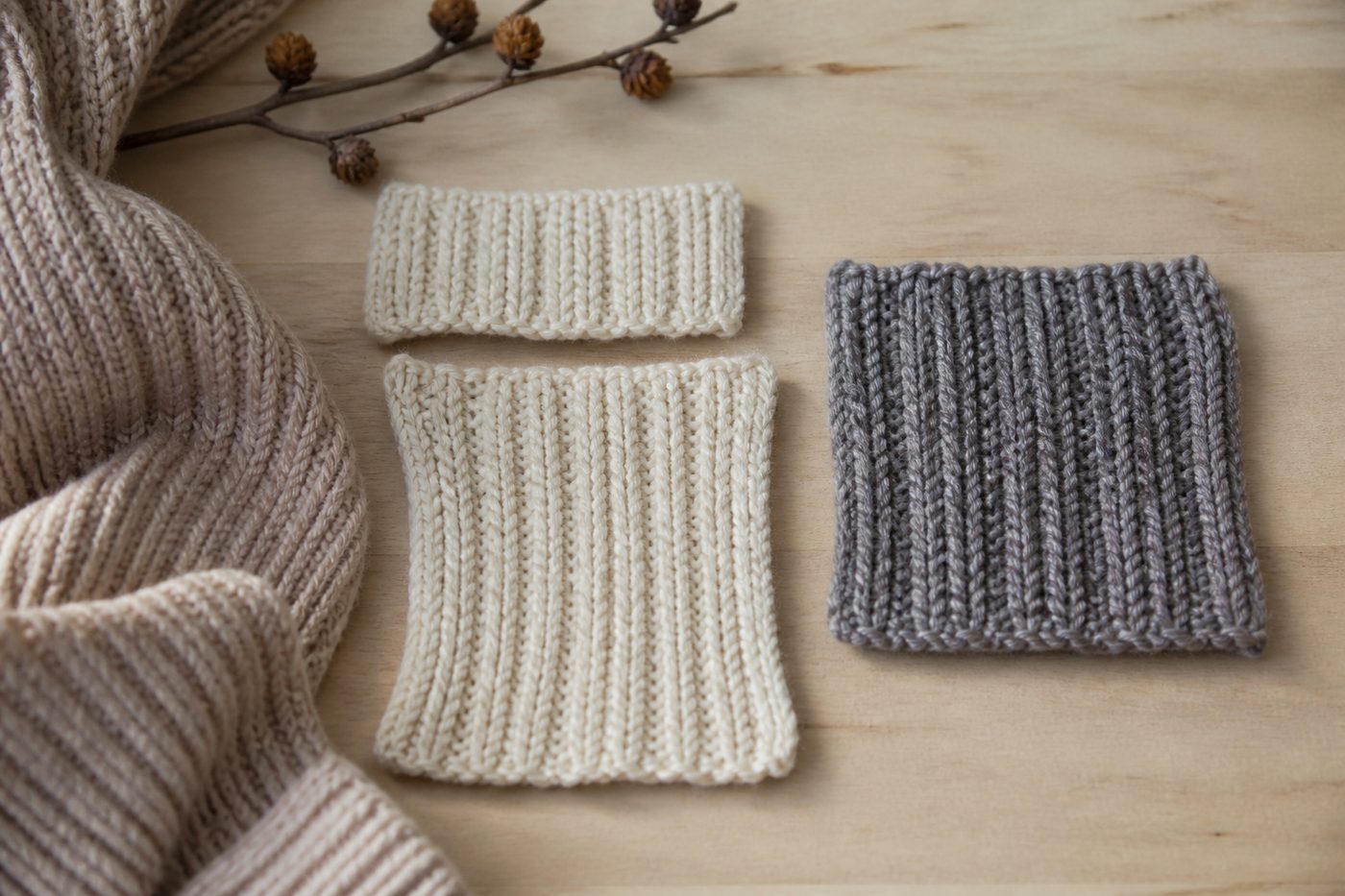
How are knitting competitions timed and judged?
Timing is simple and strict. A steward starts a clock when the signal sounds and stops it when you raise your hand with the work finished. In a speed class, the clock is the whole result. In a quality class, the clock only decides ties, and the judging happens afterward on a table under good light.
Judging follows a scorecard. Common lines are gauge (stitches and rows per inch against the stated pattern), tension evenness across the row, selvedges, cast-on and bind-off, seams and grafting, and blocking. Some fairs add a line for finishing details: woven ends, buttons sewn with a shank, no split yarn in the fabric. Points come off for loose ends, uneven edges and a blocked piece that has been stretched out of shape.
A few practical numbers help. A small fair class often allows 30 to 60 minutes for a dishcloth or a hat crown. Larger shows may give 90 minutes for a full mitten pair. Judges usually work in pairs, and most fairs publish the scorecard with the entry form, so you can see the weighting before you pay the fee.
The same discipline shows up in other table contests. Card tournaments time their rounds and score each hand against a printed sheet, and the habits are the same: know the rules, keep a clean record, and let the score decide. If you want to see how a printed scoresheet is laid out, the guides at tournament scoring sheets show the format plainly, and the logic carries over to a knitting scorecard.
What makes a fair contest fair?
A fair contest is one where every entrant had the same information and the same conditions. That means the class rules are published in advance, the yarn and needle size are either fixed or clearly free, and the time limit is the same for everyone in the room.
Look for these things on the entry form:
- A stated yarn weight and fibre, or a stated allowance to use your own.
- A stated needle size, or no restriction at all.
- A stated time limit and a stated start signal.
- A published scorecard with the points for each line.
- A named judge, or a panel, with no entrant related to them.
- A rule about pre-wound yarn and pre-cast-on stitches.
If a class says "any worsted wool, any needles, 45 minutes, dishcloth," that is fair. If it says "bring your own pattern" but judges everyone against one hidden pattern, that is not. Ask the steward before you enter. A fair contest also separates speed from quality. Mixing the two in one class, where the fastest knitter also takes the workmanship ribbon, is common at small fairs but it is not the fairest arrangement.
Weather and light matter too. A tent with dim light and a wobbly table is a disadvantage for everyone, but it hits fine-gauge work hardest. Good fairs put the knitting table near a window or under a bright lamp, and they give each entrant the same table space.
How should a first-time entrant prepare?
Prepare the way you would for any timed task: practise the exact item, then practise it again with a clock running.
Start four to six weeks out. Pick the class that matches what you already knit well. A dishcloth, a hat, or a plain mitten is a good first entry. Do not choose lace for a first contest.
Knit the item three times. Time each run and write the minutes down. You will usually find the second run is faster than the first and the third is faster than the second, which tells you your real working speed. Then knit one more at contest pace and keep it as your reference for gauge.
Check your tools. Bring two sets of the same needle size in case one breaks or a cable snaps. Bring a spare ball of the same yarn, wound and ready. Bring scissors, a tapestry needle, a row counter, and a small crochet hook for picking up dropped stitches. Put it all in one bag and leave it packed.
On the day, arrive early and find your seat. Set your yarn so it feeds without a tug. Count your cast-on twice. When the signal sounds, knit at a pace you can hold for the full time, not a sprint you cannot finish. If you drop a stitch, fix it at once; a small repair costs seconds, and a run costs the class.
What the clock does to your hands
A timer changes how you knit. Most people tighten their grip and shorten their movements, which makes the fabric denser and the gauge wrong. The cure is to knit a few rows before the start, if the rules allow a practice swatch, and to keep your shoulders down.
Speed in knitting comes from economy, not from force. Keep the working yarn close to the needle tip. Do not let go of the needle to throw the yarn if you can avoid it. Learn to read your fabric by touch so you do not look down at every stitch.
A useful drill is the one-minute count. Knit plain stockinette for one minute and count the stitches. Do it five times and average the number. That average is your honest pace, and it tells you whether a 45-minute dishcloth is realistic or a stretch.
Reading the room at a fair
Fair contests are social events as much as timed ones. The table fills up, the steward calls the start, and for the next half hour the only sound is needles and the occasional cough. Then the clock stops, the work goes on a tray, and everyone waits for the judge.
Bring a second project for the waiting. Bring a chair cushion if the benches are hard. Bring water. And bring a pen, because most fairs ask you to fill in a tag with your name, class number and fibre content after you finish.
If you do not place, ask the judge for one comment. Most will give it. One sentence about your selvedges or your bind-off is worth more than the ribbon you did not win, and it gives you something to practise before the next fair.
After the ribbon
Keep your timed swatches. Write the date, the class, the time limit and your finishing time on a tag and pin it to the swatch. In two years you will have a record of your own pace, and you will know which classes suit you.
Enter the same class twice before you move up. A second run at the same task is where most knitters improve, because the surprise is gone and the routine is set. Then try a harder class: a mitten pair, a small lace motif, a sock heel.
The rules of a fair contest are not there to catch you out. They are there so that a knitter at a kitchen table and a knitter in a guild both stand at the same line when the signal sounds. Read them, practise the item, and the clock becomes just another tool.
Sources
For reference, see festivalofquilts.com and si.edu.