Entry of
The Knitting Notebook as Archive
A knitting notebook is a working archive. What to write down, how regional patterns travel between hands, and what makes an archive usable for a beginner.
A knitting notebook is worth keeping because a knitted object cannot explain itself. The yarn, the needle size, the date and the small corrections are the only record of how the thing came to exist. Write those down while your hands still remember them, and the entry becomes usable years later, by you or by someone else.
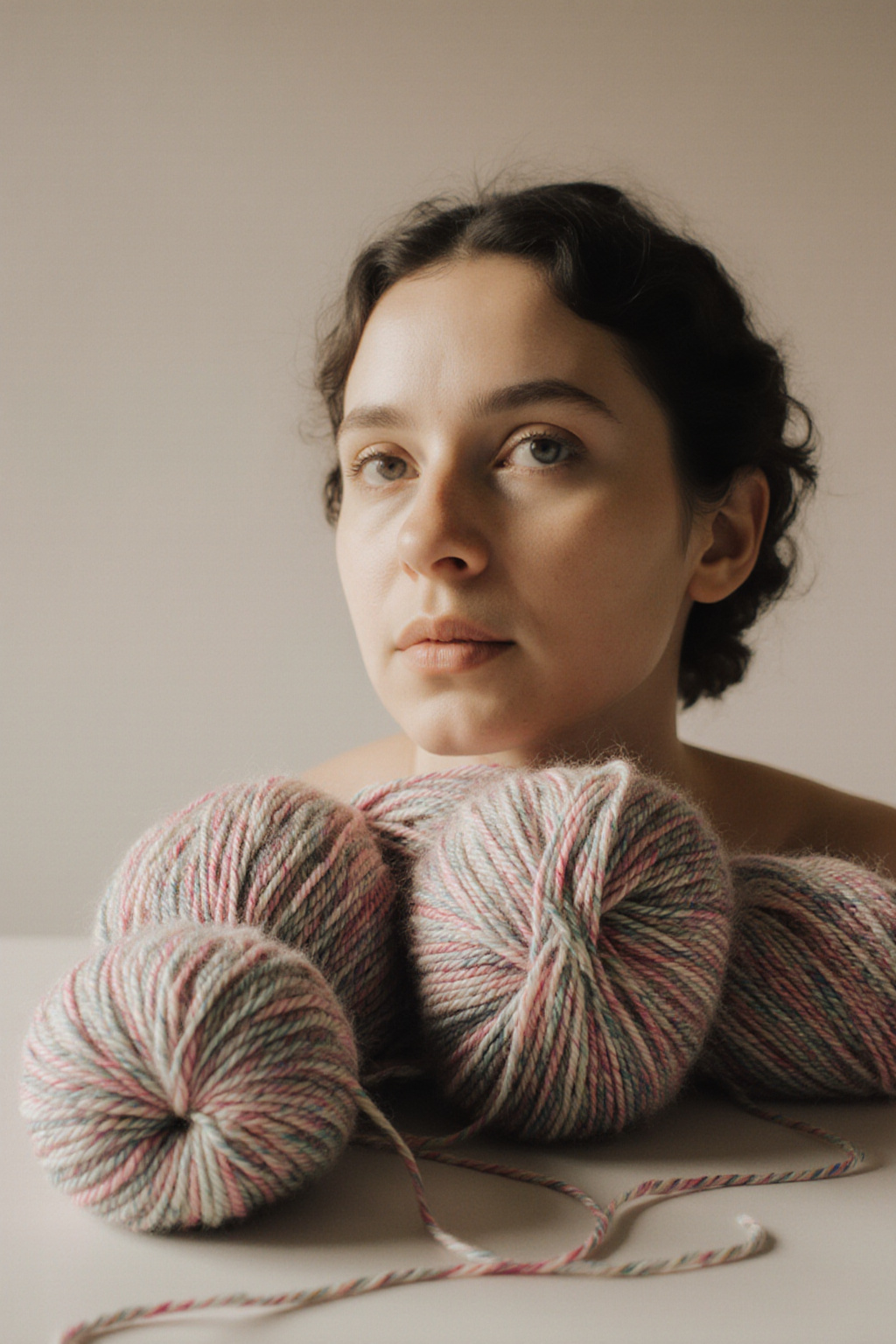
The same problem sits behind other ephemeral practices. Dancers and filmmakers in Catalonia keep dated records of work that exists only in performance, and their guides on documenting ephemeral work are a practical model for anyone holding needles: see the Catalan archive of hybrid creation for how they file credits, dates and context. A notebook is a small archive. It follows the same rules.
What is worth writing down in a knitting notebook?
Write the facts you cannot recover from the finished object. At minimum: the date you cast on, the date you bound off, the yarn name and colourway, the fibre content, the yardage used, the needle size in millimetres, and the gauge over 10 cm before blocking and after. Add the pattern name and its source, even if you changed it.
Then write the things that only exist in the making. Where you were sitting. Who was in the room. Which row you ripped back and why. A sleeve that came out 2 cm short. A dye lot that looked different in daylight. These notes are short. One line each is enough.
Keep a second column for the numbers that matter later: stitches cast on, stitches decreased per round, total rows in the body. If you knit the same sock twice, the second pair takes half the time because the numbers are already there.
A dated entry is the unit. One entry per project, opened on the day you start and closed on the day you finish. If the project stalls for a year, the entry waits. Do not rewrite it later. Corrections go in a new line with a new date.
How do regional patterns travel between hands?
They travel the way most knitting travels: person to person, with a sample in the hand. A gansey from a fishing village, a Fair Isle yoke, a Catalan _mitenes_, a Latvian mitten cuff. The pattern is not a document first. It is a garment, and the document comes after.
What carries across is not the whole pattern but the parts that are hard to guess. The cast on. The way the heel turns. The rate of increase on a sleeve. A knitter who moves from one region to another takes those parts in her fingers and adapts them to the wool she can buy locally.
This is why notebooks matter for regional work. When a pattern is written down with a date and a place, it stops being folklore and becomes a record. A note like "cuff pattern from my grandmother, Girona, 1974, worked on 2.25 mm" tells the next knitter where the thing came from and what it was worked on. Without the date and the place, the same cuff is just a shape.
Regional patterns also travel through institutions. Museums, guilds and regional archives hold samples, photographs and written instructions. A knitter who wants to work a traditional pattern is doing archival research, whether or not she calls it that. The habit of citing a source, the way an academic would, costs nothing and helps everyone who comes after.
What makes an archive usable for a beginner?
Three things: it is dated, it is indexed, and it is honest about gaps.
Dated means every entry has a day, a month and a year. A beginner who opens a notebook from ten years ago can see how fast she used to knit and how much she has changed. Dates also settle arguments about which version of a pattern is the later one.
Indexed means there is a list at the front or the back. Project name, date, yarn, needle. One line per project. Without an index, a notebook is a pile of paper. With one, it is a reference book.
Honest about gaps means you write down the failures too. The sweater that felted. The sock that was too tight. The yarn that bled onto white wool. A beginner reading only successes learns nothing about risk. A beginner reading a failed entry learns what to avoid, and that failure is normal.
A usable archive is also small enough to keep. One notebook per decade is enough. Do not buy a system. Buy a notebook with numbered pages and a sewn spine, and write in ink.
The dated entry, line by line
A dated entry has five lines, and they take two minutes to write.
- Date started, date finished.
- Yarn: name, colourway, fibre, yardage, dye lot.
- Needles and gauge: mm, stitches and rows over 10 cm, before and after blocking.
- Pattern source: book, magazine, website, or "own" if you made it up.
- Notes: fit, changes, problems, where you were.
If you knit from someone else's pattern, copy the numbers you actually used, not the numbers the pattern gave. The pattern is a proposal. Your notebook is the record of what happened.
Why the archive outlives the object
Knitted things wear out. Moths find them. Children grow out of them. A sweater knit in 1998 may be gone by 2028, but the entry from 1998 is still there, and it still tells you the gauge, the yarn and the fit.
This is the same reason dance companies and film archives keep documentation of work that only existed for one evening. The work is ephemeral. The record is not. A knitter who keeps a dated notebook is doing the same thing at a smaller scale, and the habit pays off in the same way: the next project starts from knowledge instead of guesswork.
Start one entry today. Write the date at the top. Write the yarn and the needle. The rest will follow.
A note on storage
Keep the notebook where you knit, not in a drawer. A notebook on the table gets written in. A notebook in a drawer gets forgotten. If you keep digital notes, back them up once a year and print the index. Paper survives software.
If you keep samples, keep them with the notes. A 10 cm square of the yarn, stapled to the page, tells you more about the colour than any photograph. Museums do this. You can too.
Sources
For reference, see britannica.com.