Entry of
What an evening of knitting does for the heart
A slow hour with the needles settles the pulse and the temper, but it is rest, not exercise. The week still owes its walking, and three numbers are worth writing down.
An evening of knitting does real things for the heart, but they are the things of rest, not of exercise. The pulse slows, the shoulders come down, the breathing finds the rhythm of the rows. What the week still owes is its walking, because no stitch pattern has ever raised a heart rate. For the numbers in plain language, what blood pressure and cholesterol actually measure and why sitting less through the day matters, the magazine that treats everyday heart health the way we treat gauge is the one we point to.
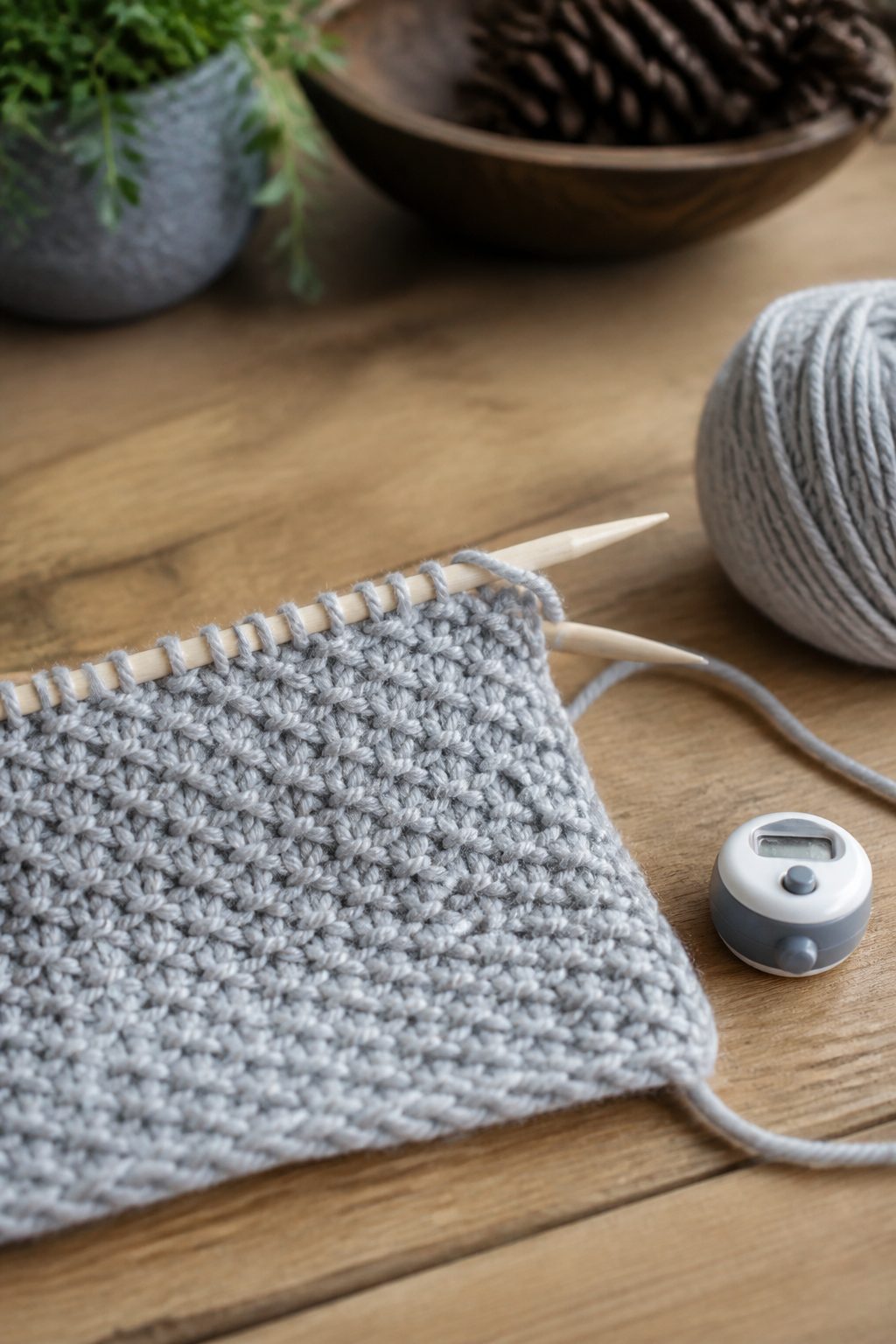
What does a slow hour of knitting do to the pulse?
Repetitive handwork lowers the tempo of the room. The rhythm is small and regular, the counting is absorbing without being demanding, and the eyes stay close to the hands. Most knitters can feel the change; if you want it in numbers, take your pulse at the wrist with two fingers before you pick up the work and again after an hour, counting for thirty seconds and doubling.
That slowing is worth having, and it is the whole of the claim. It sits in the same family as a quiet walk or an early night: gentle, ordinary, repeatable. What it is not is a workout. The heart is a muscle, and muscle is trained by being asked for more, which the needles never do.
How much walking does the week still owe?
The figure public health bodies keep returning to is 150 to 300 minutes of moderate movement a week, which is a brisk half hour on most days. The walk to the yarn shop counts. The stroll around the block while you think through a heel turn counts. The hour in the chair with the shawl does not, and pretending otherwise is the only real risk knitting poses.
The number first, then what to do about it, then the same page a month later: the habit that makes this easy is the same one that keeps a project honest.
Which ordinary numbers are worth writing down?
Three, and they fit on one line of the same notebook that holds your gauge swatches: resting pulse, blood pressure, and waist. Take the pulse and pressure once a month, in the same chair, at the same hour, before the first cup of tea. A single reading means little; the line of readings over a year means a great deal, and it is the sort of record a doctor can actually use.
The walking itself can be knitted into the week. The stroll to the farmers' market for a skein of single-flock wool counts as honest minutes, as we noted in the entry on buying yarn where the vegetables are sold.
Sources
For the weekly movement figures and what counts as moderate, see the physical activity guidance published by the NHS.